For most of us, the problem is not having too few photographs of someone we have lost — it is having too many. Thousands of images, scattered across a phone, a laptop, an old camera roll, Facebook, a shared family album, perhaps a shoebox of prints in a drawer somewhere. Faced with all of it at once, it is easy to feel paralysed before you have even begun. This guide is here to help you turn that overwhelming pile into a memorial that truly feels like them.
Start by gathering everything in one place
Before you can choose, you need to be able to see everything together. Spend an afternoon — or ask a family member to help — pulling photos from every place they live: your phone's camera roll and any cloud backup, old laptops and hard drives, social media accounts, and messages where photos may have been shared over the years. Most platforms, including Facebook and Instagram, let you download your own photos and the ones you are tagged in from the account's settings.
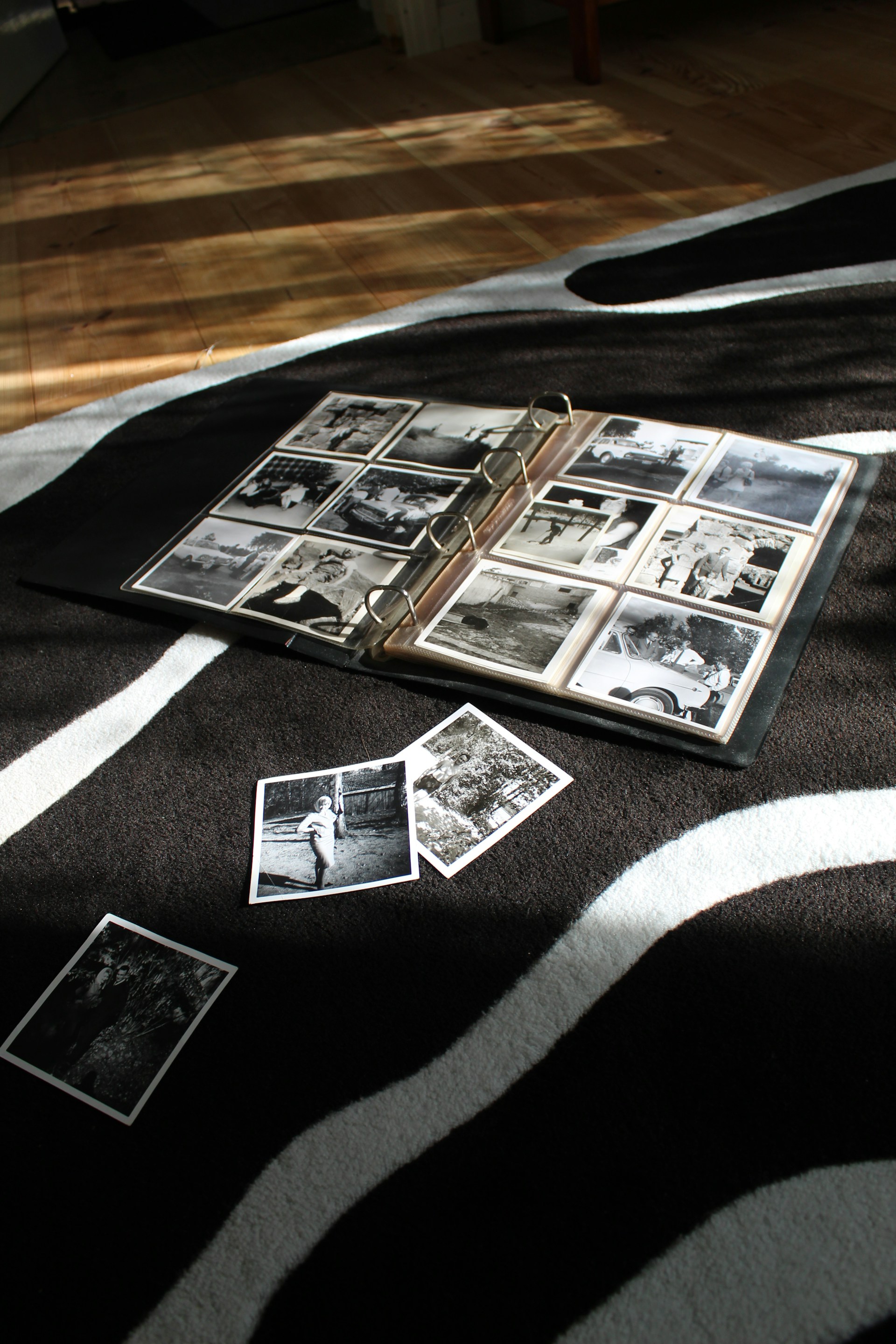
If there are physical prints — in albums, frames, or boxes — it is worth photographing or scanning the best of them too. Some of the most treasured images of a person's earlier life often exist only on paper, and once they are digitised they can sit alongside everything else in the memorial, safe and shareable for good.
You do not need to sort anything yet. The goal at this stage is simply to get everything visible in one place, so that nothing gets missed and you are choosing from the whole picture rather than whatever happens to be easiest to find.
Think in chapters of a life, not just "best photos"
It is tempting to scroll through everything looking for the most flattering or technically perfect images. But a memorial tends to feel most complete when it reads less like a highlight reel and more like the chapters of a life — childhood, family, friendships, work, the people and places they loved, the milestones, and the quiet, ordinary days in between.
Try gathering a handful of images from each period or theme, rather than dozens from one and none from another. A memorial that moves across a whole lifetime — not just the years people remember most clearly — often becomes the place where someone discovers a side of the person they never knew.
What makes a photo "memorial-worthy"
Technical quality matters far less than people expect. A slightly blurry photo of someone caught mid-laugh, glancing sideways at whoever was holding the camera, will almost always mean more than a posed, perfectly lit portrait. Look for the photos that capture something true about them — their expressions, their habits, the way they stood next to the people they loved.
It can help to ask yourself, of each photo: does this feel like them? If the answer is yes, it belongs in the memorial, however imperfect the lighting or the framing. These are the images that will make someone smile, or well up, when they come across them again.
Ask family and friends to help
You almost certainly do not hold every good photo of the person you are remembering — and neither does anyone else, individually. A childhood friend may have photos from years before you knew them. A former colleague may have a picture from a moment that meant something you never knew about. A sibling's phone may hold images that have never been shared with anyone.
A short, simple message — "I'm putting together a memorial for [Name] and would love to include a few of your favourite photos, if you're willing to share them" — often brings in images that change the whole shape of the collection. If your memorial allows it, you can also invite people to upload directly, so the memorial keeps growing as a shared act of remembering, rather than something finished and closed.
Don't forget video and audio
Photographs capture a moment, but a few seconds of video or sound can capture something photographs cannot — the particular way someone laughed, the sound of their voice, the small movements and mannerisms that made them who they were. If you have any video clips, voice notes, or recordings, however short or imperfect, they are often the most precious things in the whole collection.
A Memory Keep memorial holds photos, videos, and background audio together in one slideshow, so these small recordings have a permanent home — ready to be rediscovered, rather than lost on an old phone that is eventually replaced.
A simple way to narrow it down
Once you have everything gathered, work through it in two passes rather than trying to make every decision at once:
- First pass — be generous. Go through everything and set aside anything that gives you pause, even slightly. Do not overthink it; just collect a "maybe" pile. This pass is about not missing anything that matters.
- Second pass — be selective. Go back through the "maybe" pile with fresh eyes, ideally a day or two later, and choose the ones that still feel right. This is where you trim duplicates, near-identical shots, and images that, on reflection, do not add anything new.
Many families find that somewhere between 40 and 150 photos creates a memorial that feels rich and tells a full story without becoming repetitive — though there is no rule, and a Memory Keep memorial can always grow over time as more photos surface.
Choosing your cover photo
The first image anyone sees when they open the memorial sets the tone for everything that follows. It is worth choosing this one with particular care — a photo that feels warm, unmistakably them, and welcoming to someone who may be visiting the memorial for the first time, perhaps not knowing quite what to expect.
Many families choose a photo where the person is looking toward the camera, smiling or at ease — something that feels like being greeted by them. You can set or change your memorial's cover photo at any time from your dashboard, so it is perfectly fine to start with one and change it later if a better one comes to light.
Bringing it all together
There is no perfect way to do this, and no need to get it exactly right the first time. A memorial is never really finished — it is something that can keep growing as more photos are found, as other people add their own, and as the family decides, gradually, what they most want to remember and share. The most important step is simply to begin.