
The best memorial quotes are concise, heartfelt messages that capture the unique spirit of those we remember. A well-chosen tribute quote does more than fill space on a card or headstone. It names a truth about the person you loved, gives mourners something to hold onto, and honors a life in a way that generic condolences never can. Whether you are planning a memorial service, selecting words for an engraving, or writing a personal tribute, the right quote carries real emotional weight.
1. What are the best memorial quotes for engraving?
Quotes under 15 words are the standard recommendation for engravings. Legibility on headstones, plaques, and jewelry depends on brevity. Fewer words give each one more visual and emotional space.
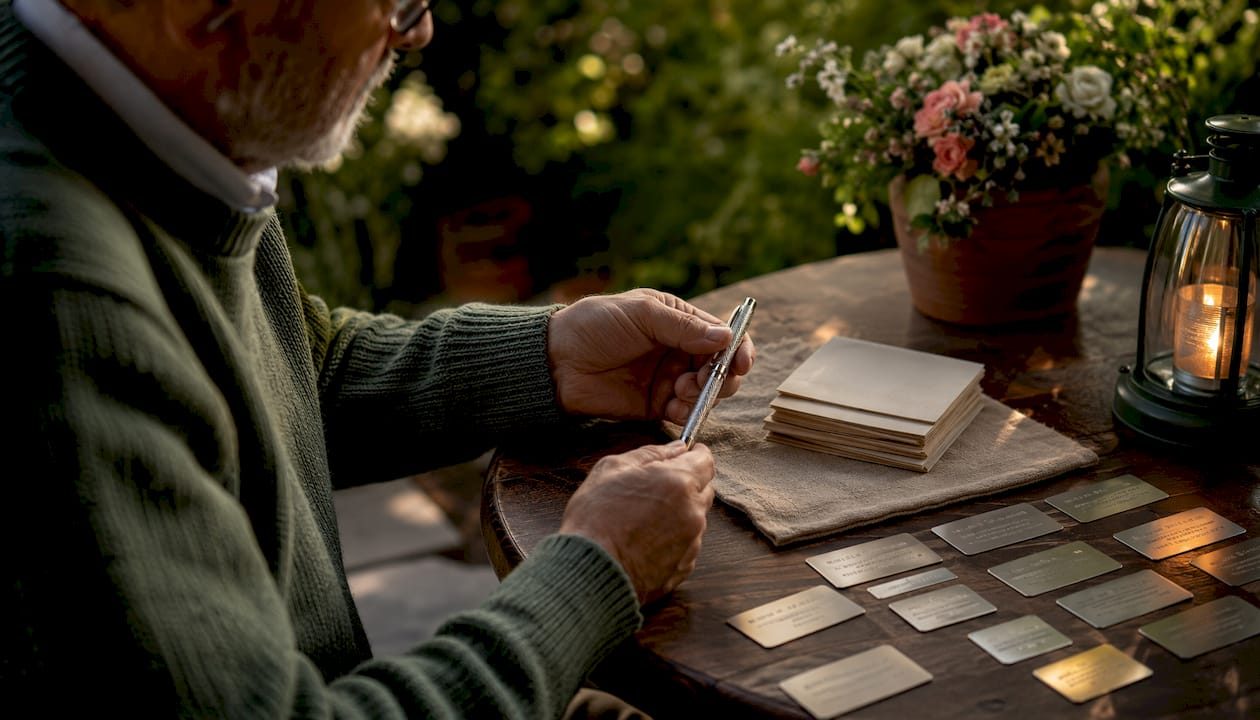
The strongest short tributes use plain, timeless language. Ornate phrasing that reads beautifully in a poem often becomes cluttered when carved into stone or stamped onto a pendant. Phrases like “Forever in our hearts” or “Gone but never forgotten” have endured precisely because they are clear and universal.
Examples that work well for physical keepsakes include:
-
“Loved beyond measure, missed beyond words.”
-
“Until we meet again.”
-
“A life well lived.”
-
“Always in our hearts.”
-
“The light never goes out.”
Pro Tip: Confirm character limits with your engraver or memorial provider before finalizing any quote. A phrase that fits perfectly on a large headstone may become illegible on a small plaque or piece of jewelry.
2. How tone and occasion shape the right quote
Funeral quotes express sympathy and mourning, while celebration of life quotes focus on joy and the positive impact of the person. Choosing between them is not about preference. It is about reading the room and honoring the moment.
A formal funeral service calls for dignified, classic language. Think C.S. Lewis, Helen Keller, or Mary Oliver, all of whom appear regularly in modern grief writing for good reason. Their words carry weight without feeling theatrical. A casual backyard gathering to celebrate a life, on the other hand, can hold a funny story or a quote that sounds exactly like the person who died.
The four main tone categories for remembrance quotes are:
-
Peaceful rest. Quiet, gentle phrases that offer comfort to mourners. Best for traditional services and headstones.
-
Love and memory. Quotes centered on the bond between the living and the deceased. Suited to cards, programs, and personal tributes.
-
Uplifting spirit. Messages of hope and legacy. Ideal for celebration of life ceremonies and speeches.
-
Humorous remembrance. Light, personal lines that reflect the deceased’s personality. Reserved for intimate settings where the audience knew them well.
The memorial setting strongly dictates tone. Matching your quote to the setting shows respect for both the deceased and the people gathered to grieve.
3. Memorial quotes by relationship and type of loss
Choosing a quote specific to your relationship with the deceased makes the tribute feel personal rather than borrowed. A quote for a parent carries different emotional weight than one for a friend, a spouse, or a beloved pet. Specificity is what separates a meaningful tribute from a generic one.
Here are examples organized by relationship:
-
Loss of a parent: “A parent’s love is the first love we know and the last we forget.” Reflects the foundational nature of that bond.
-
Loss of a spouse or partner: “You were my home. You still are.” Short, direct, and deeply personal.
-
Loss of a sibling: “We shared a childhood, a family, and a lifetime of small moments. I carry all of them.” Honors the shared history unique to siblings.
-
Loss of a friend: “The best people leave the biggest spaces.” Acknowledges the irreplaceable quality of true friendship.
-
Loss of a pet: “You were small in size and infinite in love.” Captures the particular grief of losing an animal companion.
Personalized quotes reflecting the deceased’s spirit consistently outperform generic published lines in emotional impact. The closer the words come to capturing who that person or pet actually was, the more comfort they bring to those left behind.
Grief for a pet is real grief. The loss of an animal companion deserves the same care and intention in tribute as any other loss. Choosing words that honor the specific joy that animal brought into your life matters.
4. Quotes that avoid the most common pitfalls
Overused phrases like “Everything happens for a reason” tend to feel dismissive. They attempt to explain grief rather than acknowledge it. The bereaved do not need their loss explained. They need it witnessed.
Effective grief quotes name a truth about the loss without trying to fix it. They leave emotional space for the reader’s own feelings. A quote that says “Grief is the price of love” does this well. It does not promise resolution. It simply tells the truth.
Three qualities define quotes that resonate:
-
Specificity. The quote reflects something true about this loss, not loss in general.
-
Restraint. It does not lecture or moralize. It observes.
-
Space. It allows the reader to bring their own emotion to the words.
Avoid quotes that assign divine purpose to death, suggest the bereaved should feel grateful, or rush toward comfort before acknowledging pain. These patterns, however well-intentioned, often create distance rather than connection.
5. Inspiring memorial quotes to celebrate life and legacy
The most uplifting remembrance quotes shift focus from absence to presence. They remind us what the person gave, not only what was taken. This tone works especially well in celebration of life programs, speeches, and keepsakes meant to be kept and revisited.
“To live in hearts we leave behind is not to die.” — Thomas Campbell
This line, written by the Scottish poet Thomas Campbell, has appeared in memorial services for generations. Its power lies in its simplicity. It reframes death as a form of continuation, which is exactly what a celebration of life ceremony asks mourners to hold onto.
Other quotes in this spirit include:
-
Mary Oliver’s “Tell me, what is it you plan to do with your one wild and precious life?” works beautifully in tributes for people who lived boldly.
-
“What we have once enjoyed, we can never lose. All that we love deeply becomes a part of us,” attributed to Helen Keller, suits tributes focused on lasting love.
-
Mitch Albom’s writing on memory and connection offers lines that work well for programs and speeches without feeling heavy.
Matching quotes to the deceased’s personality is what practitioners call the “character test.” Ask whether the person being honored would have recognized themselves in the words. If the answer is yes, the quote is right.
Pro Tip: For celebration of life programs, pair an uplifting quote with a specific memory or anecdote. The quote gives the feeling. The story gives the proof.
6. Short tribute quotes for cards, programs, and social posts
Short tribute quotes serve a different purpose than engraving lines or speech excerpts. They need to land quickly, travel well across formats, and feel complete on their own. A card, a social media post, or a printed program gives you limited space and a reader who may be absorbing many messages at once.
The most effective short tribute quotes share one quality: they say one true thing. Not two things, not a sentiment and a hope. One clear, honest observation about love, loss, or memory.
Examples that work across formats:
-
“Forever loved. Forever missed.”
-
“The memories we made will never fade.”
-
“Your light still shines.”
-
“Thank you for every moment.”
-
“Love like yours doesn’t end.”
These lines work because they are complete. They do not require context to land. A reader encountering them on a sympathy card or a memorial page feels their meaning immediately.
The best memorial quotes act as a verbal bridge when words fail the bereaved. That is their real function. Not to summarize a life, but to hold space for the feelings that cannot be spoken.
Key takeaways
The most meaningful memorial quotes combine brevity, emotional honesty, and specificity to the person being honored, making them far more comforting than generic phrases.
| Point | Details |
|---|---|
| Keep engravings brief | Quotes under 15 words ensure legibility on headstones, plaques, and jewelry. |
| Match tone to the occasion | Formal services call for classic, dignified language; casual settings allow personal or humorous lines. |
| Personalize to the person | Quotes tailored to the deceased’s character consistently carry more emotional weight than generic tributes. |
| Avoid dismissive phrases | Lines like “Everything happens for a reason” minimize grief rather than acknowledge it. |
| One true thing is enough | The strongest short tributes say one honest thing clearly, without trying to explain or resolve the loss. |
What we have learned about choosing the right words
At Memory Keep, we have seen thousands of tributes written for people and pets. The ones that stay with families are never the most eloquent. They are the most honest.
The impulse to reach for a famous quote is understandable. Helen Keller and C.S. Lewis have earned their place in grief writing. But the most comforting words we see on memorial pages are often the ones someone wrote themselves, late at night, trying to describe exactly what they miss. “She always smelled like lavender and coffee.” “He laughed before the joke was finished.” Those lines are not polished. They are true. And truth is what grief needs.
We also notice that families sometimes choose quotes that comfort the writer more than the bereaved. A line that offers resolution can feel hollow to someone who is not ready for resolution. The better choice is a quote that simply says: this loss is real, this person mattered, and we are not pretending otherwise.
Trust your own knowledge of the person you are honoring. No published anthology knows them the way you do. Use the famous quotes as a starting point, not a destination. The right words are usually closer than you think.
— Memory Keep
Honoring memories with Memory Keep
Choosing the right words is only the beginning of a lasting tribute.
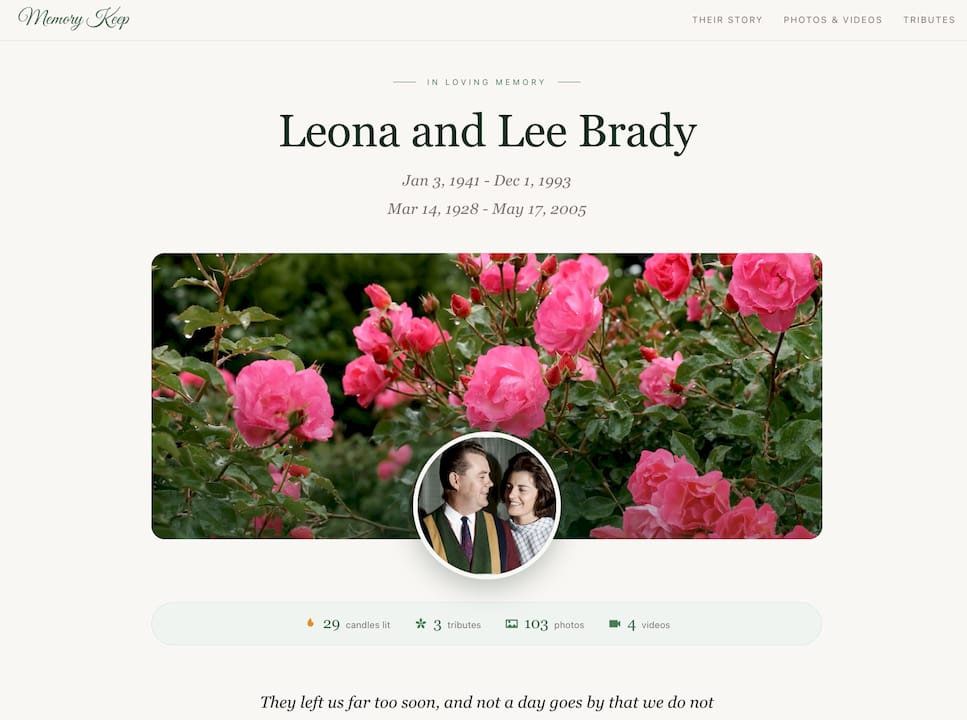
Memory Keep is an online memorial platform built for families who want to preserve more than a quote. You can create a dedicated memorial page for a person or a pet, add photos and videos, share meaningful tributes, and invite family and friends anywhere in the world to leave their own messages of remembrance. Each memorial has a unique link that lives as long as you need it to. The words you choose today, the photos you gather, and the stories people share become a permanent place to return to. Memory Keep makes that possible, gently and without complexity.
FAQ
What makes a memorial quote truly meaningful?
Meaningful quotes name a truth about the loss without trying to fix or explain it. The best ones are specific, restrained, and leave emotional space for the reader’s own feelings.
How long should a quote be for a headstone or plaque?
Quotes under 15 words are the standard recommendation for engravings, with under 10 words being ideal for smaller surfaces. Always confirm character limits with your engraver before finalizing.
Can I write my own memorial quote instead of using a published one?
Original lines tailored to a loved one’s character often carry more emotional impact than published quotes. Your personal knowledge of the person gives your words a specificity no anthology can match.
What quotes work best for a celebration of life service?
Uplifting quotes focused on legacy, love, and a life well lived suit celebration of life ceremonies. Setting influences tone, so casual gatherings can also hold humorous or deeply personal lines that reflect the deceased’s personality.
Are there quotes that should be avoided at memorials?
Phrases like “Everything happens for a reason” tend to feel dismissive to the bereaved. Avoid quotes that assign purpose to death, rush toward comfort, or minimize the reality of the loss.