A death anniversary message is a brief, sincere expression of remembrance that tells a grieving person you have not forgotten their loved one. These messages are not eulogies or lengthy reflections. They are small, deliberate acts of acknowledgment that carry enormous weight. The right words, sent at the right moment, can ease the particular loneliness that arrives every year on the date of a loss. This guide gives you the language, timing, and examples to send a message that truly comforts.
1. What makes an effective death anniversary message?
The most effective death anniversary message is short, specific, and free of advice. Grief counselors and bereavement writers consistently point to one quality above all others: acknowledgment. The bereaved do not need you to fix anything. They need to know you remember.
Certain phrases actively harm rather than help. Avoid minimizing language like “they are in a better place,” “at least it was peaceful,” or “time heals all wounds.” These phrases are seen as dismissing grief on a day when pain can return with full force. Replace them with plain, honest words.
Specificity is what separates a meaningful message from a forgettable one. Including a vivid, sensory memory of the deceased, something you saw, heard, or felt in their presence, proves that the person was truly known and cherished. “I still think about how she laughed at her own jokes before she finished telling them” lands far deeper than “She was a wonderful person.”
Using the deceased person’s name matters more than most people realize. Grieving family members say that hearing their loved one’s name is one of the most comforting things during grief. Write “I’m thinking of you and of David today” rather than “I’m thinking of you and your loss.”
-
Keep the message to 2–4 sentences for texts and social posts.
-
Name the deceased directly.
-
Include one specific memory or quality if you knew the person.
-
Avoid advice, silver linings, and comparisons to other losses.
-
Focus on the bereaved’s feelings, not your own discomfort with grief.
Pro Tip: Send your message the evening before the anniversary. The day itself is often filled with family logistics or quiet, private reflection. A note the night before shows you are aware of the date and thinking of them before the hardest hours arrive.
2. Sample messages for different relationships
The right tone for a sympathy message for an anniversary depends on how close you were to the person who died and to the person grieving. A message to a spouse who lost their partner reads differently than a note to a coworker who lost a parent.
For a spouse or partner:
-
“I’m thinking of you and of Maria today. She made every room warmer just by walking in.”
-
“One year ago, the world changed for you. I want you to know I’m here, and I haven’t forgotten her.”
-
“Thinking of you on this hard day. James was one of the kindest people I’ve ever known.”
For a parent who lost a child:
-
“No words are enough today. I’m holding you in my heart and remembering your son.”
-
“I think of Lily often. She had the most contagious laugh. I’m so sorry you carry this.”
For a sibling:
-
“I know today is heavy. I’m thinking of you and of your brother. He would have had something funny to say about all of this.”
-
“Missing him with you today. Call me if you want to talk or just sit on the phone.”
For a friend:
-
“I remember exactly where I was when you called me. I’ve been thinking of you all week.”
-
“Your mom was the kind of person who made you feel seen. I miss her too, and I’m thinking of you.”
For a coworker or acquaintance:
-
“I wanted you to know I’m thinking of you today. I hope you feel some peace.”
-
“I remember how much you loved your father. Sending you warmth on this anniversary.”
Tailoring your message to the relationship removes the generic quality that makes condolences feel hollow. A coworker does not need your deepest grief. A best friend deserves your most honest memory.
3. When and how to send your message
Timing shapes how a message lands. Sending a card 3–4 days before the anniversary gives it time to arrive without the chaos of same-day mail. For texts and emails, the night before is often better than the morning of.
The method of delivery should match your closeness to the person.
-
Text message: Best for close friends and family. Immediate, personal, and easy to respond to at their own pace.
-
Handwritten card: Appropriate for any relationship. Takes more effort and is often kept for years.
-
Phone call: Reserve this for your closest relationships. A call demands a response, which can feel like pressure on a hard day. Offer to call and let them decide.
-
Social media post: Suitable for public tributes or when you are not in direct contact. Tag the bereaved only if you know they are comfortable with public acknowledgment.
-
Email: Works well for acquaintances or when you want to write more than a text allows.
Belated messages sent weeks after the anniversary are still deeply valued. The bereaved rarely track punctuality. They notice who remembered at all. If you missed the date, send the message anyway.
Pro Tip: If you are close to someone who has experienced multiple losses, keep a private calendar note for each anniversary. Remembering year after year is one of the most powerful things you can do for a grieving person.
4. How messages of remembrance evolve over the years
The tone and content of a commemorative message should shift as years pass. What comforts someone on the first anniversary differs from what resonates a decade later.
The first anniversary
The first death anniversary is often the hardest. Grief can arrive as a wave stronger than expected, even for those who felt they were healing. The goal of a first anniversary message is not to say something profound. The goal is to make the bereaved feel less alone. Keep the message simple. “I’m thinking of you today and of your mom. You don’t have to feel okay” is enough.
Years two through five
By the second or third year, the bereaved have often found a rhythm with their grief. Messages can include more specific memories without feeling overwhelming. “I was driving past the park where we used to meet her and thought of you both” adds warmth and shows the person is still present in your daily life.
Year ten and beyond
By year ten or twenty, the circle of people who still send anniversary messages has shrunk considerably. That makes each remaining message more significant, not less. A simple “I still think of him every year on this day” carries extraordinary weight when most others have moved on. Consistent remembering, year after year, becomes its own tribute.
| Anniversary | Tone | Focus |
|---|---|---|
| First year | Gentle, simple | Acknowledgment and presence |
| Years 2–5 | Warm, personal | Specific memories and qualities |
| Years 5–10 | Reflective | Legacy and lasting impact |
| Year 10 and beyond | Quiet, steadfast | The act of remembering itself |
5. Messages that honor ordinary moments
Memorial contributions that focus on ordinary moments, like comfortable silences, inside jokes, or small habits, capture a real relationship more meaningfully than grand tributes. Most people write about milestones. The messages that stay with grieving families are the ones about Tuesday afternoons.
Think about what was ordinary and irreplaceable about the person who died. Did they always burn the toast and not care? Did they send voice memos instead of texts? Did they remember every birthday in the family without writing anything down? Those details are the ones that make a message feel like a true tribute rather than a form letter.
A first death anniversary message does not need to be long or literary. It needs to be true. One honest sentence about one real moment will outlast a paragraph of beautiful but generic words.
Key takeaways
A death anniversary message works best when it is brief, specific, and focused entirely on acknowledgment rather than advice or comfort-seeking.
| Point | Details |
|---|---|
| Keep it short and specific | Two to four sentences with the deceased’s name and one real memory outperform long, generic tributes. |
| Timing matters | Send texts the night before; mail cards 3–4 days early; belated messages are still welcome. |
| Avoid minimizing phrases | Skip “at least” and “better place” language, which dismisses grief on its hardest days. |
| Adjust tone over time | First-year messages prioritize presence; later messages can include richer memories and reflection. |
| Consistent remembering is the message | By year ten, simply sending a note shows a loyalty that most people have stopped offering. |
What we’ve learned about remembering
At Memory Keep, we have seen thousands of tributes left on memorial pages, and the pattern is clear. The messages that mean the most are never the longest ones. They are the ones that say a name, recall a moment, and ask for nothing in return.
We have noticed something else. The bereaved often return to those messages on the hardest days, not just on anniversaries. A note left on a memorial page becomes a permanent record of love. It sits there in the months and years that follow, ready to be read again when grief arrives without warning.
The advice to “say something” is correct, but incomplete. Say something specific. Say the name. Say the memory. Say “I haven’t forgotten.” Those three things, delivered with sincerity, are more comforting than any carefully crafted phrase. Generic condolences protect the sender from discomfort. Specific ones protect the bereaved from feeling forgotten.
We encourage you to write the message you have been putting off. The one where you almost texted but weren’t sure what to say. Send it late. Send it imperfect. The bereaved will not grade your grammar. They will feel the fact that you remembered.
— Memory Keep
A place to keep memories and messages year-round
Grief does not follow a calendar, and neither should remembrance. Memory Keep is an online memorial platform where families can preserve photos, videos, and written tributes for the people and pets they have lost.
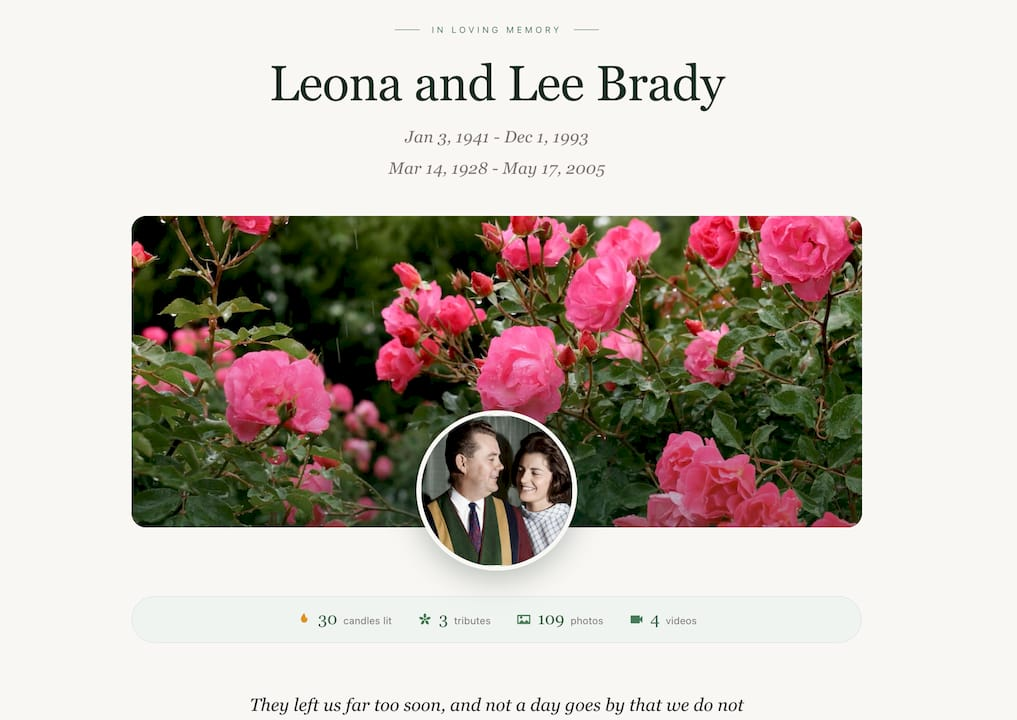
Each memorial has a unique link you can share with family and friends anywhere in the world. Visitors can leave messages of remembrance directly on the page, creating a living record of love that the bereaved can return to on anniversaries, birthdays, or any ordinary day when they need to feel close to someone they have lost. Memory Keep makes it possible to honor a loved one not just once a year, but whenever the moment calls for it.
FAQ
What should I say in a death anniversary message?
Keep it brief and specific. Name the deceased, include one real memory if you have one, and focus on acknowledging the bereaved’s grief rather than offering advice or silver linings.
Is it okay to send a death anniversary message late?
Yes. Late messages are still valued by the bereaved, who notice who remembered at all rather than who was punctual. Send it even if weeks have passed.
What phrases should I avoid in a sympathy message for an anniversary?
Avoid “they are in a better place,” “at least it was peaceful,” and “time heals all wounds.” These phrases minimize grief and are unwelcome on a day when pain returns strongly.
How long should a death anniversary message be?
Two to four sentences is the right length for most messages. Longer is not more comforting. A short, honest acknowledgment carries more weight than a lengthy tribute full of general praise.
Does it matter if I send a message on the first anniversary versus later years?
The first anniversary calls for the simplest, most supportive message. Later anniversaries can include richer memories and reflection. By year ten, simply remembering the date is itself a meaningful act.