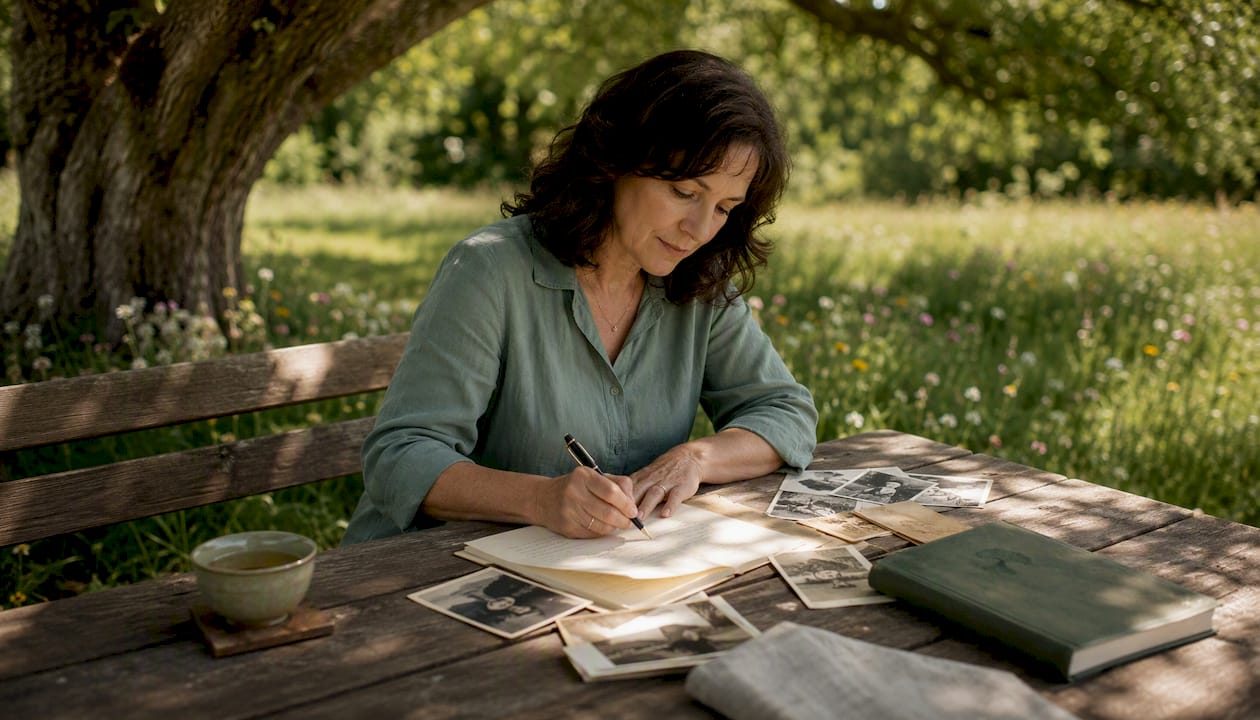
A memorial life story is a short, honest portrait that preserves someone’s voice, their small rituals, and the memories loved ones will return to long after the service is over. The fastest way to start: write one sentence. For a person, try “[Name] was the kind of person who [specific habit or quality].” For a pet, try “[Name] came into our lives in [year] and changed everything about how we understood love.” Then publish it on Memory Keep, where family anywhere in the world can read it, add photos, and leave messages of remembrance.
“The goal of a life story is preservation for future generations — which means including flaws and ordinary moments to ensure an honest, human portrait.” NPR Life Kit
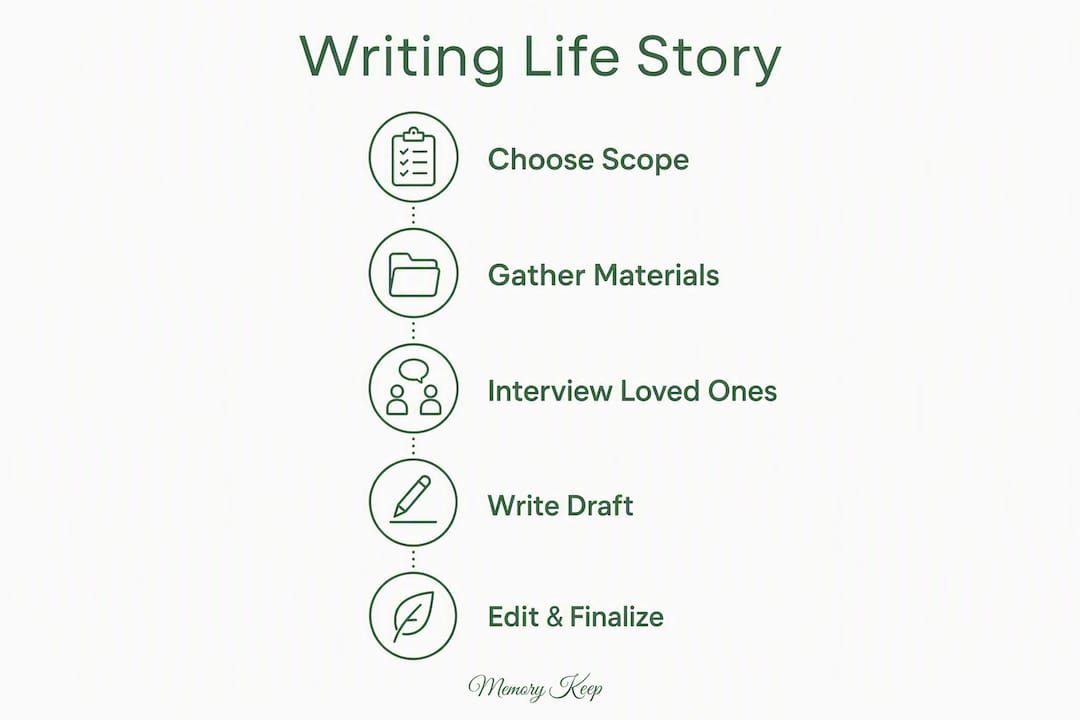
Your first three steps: pick your scope (short tribute, vignette collection, or full life story), gather one photo that captures who they were, and record one memory out loud before you forget the details.
Table of Contents
- How do you choose the right scope and format?
- What materials should you collect, and who should you interview?
- Copyable templates to stop staring at a blank page
- Writing with honesty, voice, and the right kind of detail
- How to edit, get permissions, and finalize before you publish
- Publishing your story on Memory Keep, step by step
- Key Takeaways
- What writing a memorial story taught us about grief
- Memory Keep helps you preserve and share the story
- Useful sources and further reading
How do you choose the right scope and format?
Scope is the decision most people skip, and it’s why so many memorial stories never get finished. Match the format to the time you have and the audience you’re writing for.
| Format | Length | Best for | Time needed |
|---|---|---|---|
| Short tribute | 100–300 words | Memorial service programs, headstone cards | 1–2 days |
| Vignette collection | 300–800 words per scene | Memorial pages, family sharing | 2–4 weeks |
| Full life story | 10,000+ words, multi-chapter | Legacy books, extended family archives | 3–6 months |
Chronological works well when the subject’s life had a clear arc: childhood, career, family, later years. Thematic suits someone whose life revolved around a few strong values, like faith, service, or creativity. Vignette or letter-style is the gentlest entry point for grieving writers because each scene stands alone. You don’t need the whole story to publish something meaningful.
A quick decision flow: Who is the primary reader? If it’s immediate family, a short tribute or a handful of vignettes is enough. If you want extended family and friends to contribute memories too, a vignette collection on a shared memorial page gives everyone a place to add their piece. If you have months and want a lasting document, the full life story is worth the effort.
What materials should you collect, and who should you interview?
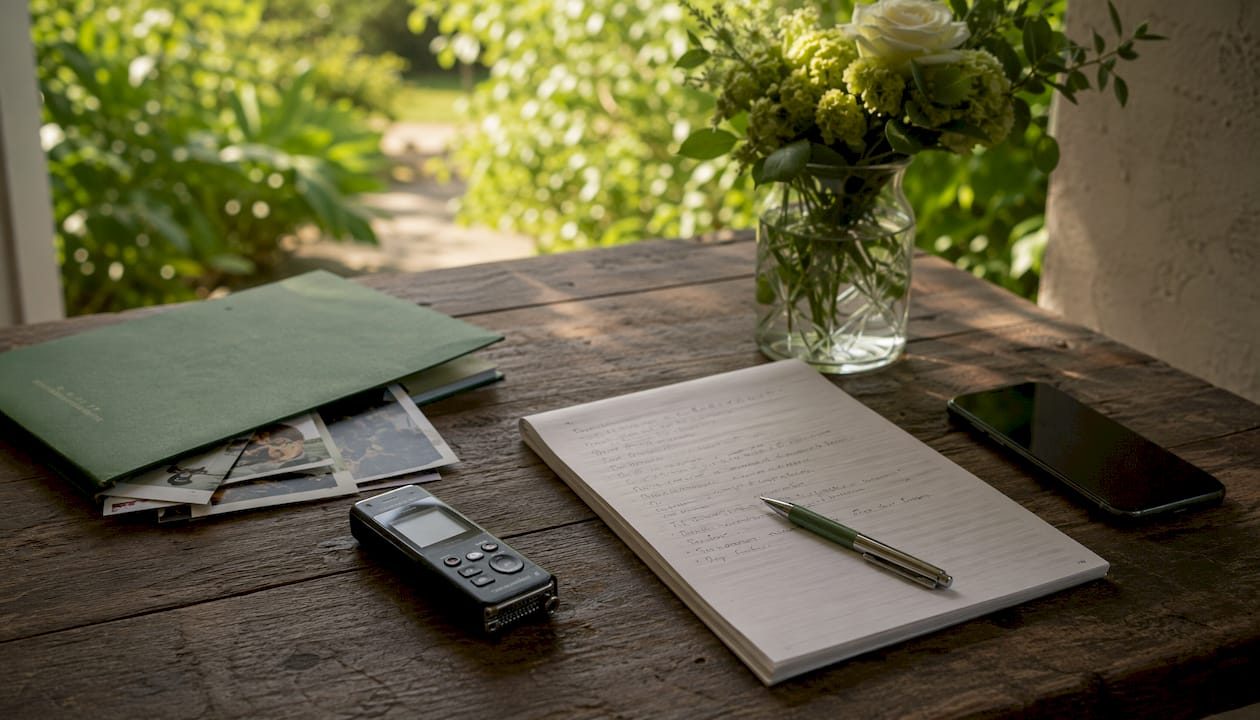
Start gathering before you start writing. The raw material is already out there.
Materials checklist:
- Photos from different life stages (childhood, milestones, ordinary Tuesday afternoons)
- Letters, cards, or handwritten notes
- Certificates, programs, or newspaper clippings
- Voicemail recordings or short video clips
- Social media posts that capture their voice
- Location details: towns, homes, schools, workplaces
Who to interview first: the person who knew them longest, then the person who knew them most recently. Record on your phone’s voice memo app. Ask permission before sharing any recording.
Interview questions by topic:
Childhood: “What’s the earliest memory you have of them?” / “What did they love doing as a kid?”
Everyday routines: “What did a normal Saturday look like for them?” / “What did they always have in the fridge?”
Favorite memory: “Tell me about a time they made you laugh until it hurt.”
What they were most proud of: “What did they talk about with real pride?”
Memoir guidance from When I Die Files recommends the Brave Draft technique: record without editing, capture the raw story first, and polish later. This prevents perfection paralysis and keeps the subject’s voice alive in the material.
Pro Tip: Set a 10-minute timer and ask one question. Stop when the timer goes off. A single timed session almost always produces one usable scene.
Copyable templates to stop staring at a blank page
Write Your Journey recommends brainstorming 10–15 key moments before you outline anything. Once you have that list, one of these three templates will fit.
Chronological (chapter-by-decade)
Chapter 1: Early years and family roots (500–800 words). Chapter 2: Coming of age (500–800 words). Chapter 3: Work, love, and building a life (800–1,200 words). Chapter 4: Later years and legacy (500–800 words). Target: 3,000–4,000 words for a readable memorial document.
Thematic (organized by subject)
Section 1: Family and home. Section 2: Work and purpose. Section 3: Faith, community, or passions. Section 4: The lessons they left behind. Each section: 400–600 words.
Vignette collection (standalone scenes)
Each vignette: 300–500 words, one scene, one moment. Ideal for memorial pages because they’re readable on-screen and pair naturally with a single photo or audio clip.
Sample opening for a person: “The thing about Dad was that he never threw anything away. Not a rubber band, not a birthday card, not a grudge — though the grudges usually softened by Christmas.”
Sample opening for a pet: “Dixie arrived as a puppy who fit in one hand and immediately claimed the entire couch as her own.” (See a real pet memorial for how this looks published.)
| Template | Best audience | Time investment | Emotional scope |
|---|---|---|---|
| Chronological | Extended family, legacy archives | Highest | Broad, full arc |
| Thematic | Friends, community members | Medium | Focused, values-driven |
| Vignette collection | All audiences, memorial pages | Lowest | Intimate, scene-by-scene |
Writing with honesty, voice, and the right kind of detail
The most common mistake in memorial writing is turning the story into a résumé. NPR’s memoir guidance is clear: draft in scenes, not summaries. Show the moment with sensory detail rather than listing what the person accomplished.
“Families often mistake a life story for a list of achievements. The real remembrance value is in ordinary routines and small moments.” When I Die Files
What to include:
- A specific smell, sound, or texture that brings them back (“the cedar smell of his workshop”)
- A phrase they always said, spelled the way they said it
- One small ritual: the Sunday pancakes, the way they answered the phone
- A moment when they were imperfect and human
What to avoid:
- Opening with birth date and place (save that for the facts’ sidebar)
- Listing every job title or award without a story attached
- Sanitizing the portrait into someone unrecognizable
- Writing in a formal register that doesn’t sound like anyone who loved them
Use quotations from your interviews directly. If a niece said, “She always burned the toast but nobody ever complained,” that line is worth more than a paragraph of description.
How to edit, get permissions, and finalize before you publish
A full professional life-story project can involve 200+ hours of work. A memorial tribute doesn’t need that, but it does need one careful editing pass.
Editing checklist:
- Read the piece aloud. Anything that trips your tongue trips the reader.
- Fact-check every name, date, and place with at least one other family member.
- Remove details that the subject would have kept private.
- Verify any direct quotation with the person who said it.
Permissions: NPR’s guidance recommends obtaining explicit permission for images and personal stories before publishing. A simple message works: “I’m including a photo of you and [Name] in the memorial. Is that okay? I’ll share the link before it goes live.”
| Scope | Realistic timeline | Key milestones |
|---|---|---|
| Short tribute | 1–2 days | Draft, one read-aloud, publish |
| Vignette collection | 2–4 weeks | Interviews, draft scenes, family review |
| Full life story | 3–6 months | Memory harvest, outline, draft, polish |
Adapting for different audiences: set the memorial page to private for immediate family during drafting, then open it to extended family and friends once the story is final. Memory Keep’s privacy settings let you control exactly who sees the page at each stage.
Publishing your story on Memory Keep, step by step
Once the story is ready, publishing takes less than an hour.
- Create a memorial page at memorykeep.online for the person or pet.
- Paste the life story into the tribute section.
- Upload photos, audio clips, or short videos to accompany each section or vignette.
- Write brief captions for each image (one sentence is enough).
- Set your privacy preference: private, family-only, or public.
- Enable collaborative uploads so family members can add their own photos and memories.
- Purchase the one-time $15 upgrade to unlock unlimited photo, video, and audio storage for that memorial.
- Copy the unique shareable link and send it to family. Order a QR code to include on a headstone, memorial card, or printed program.
Memory Keep’s platform features include interactive life-event maps, downloadable keepsake photo books, and slideshow videos, all of which give the written story a richer home than a printed program alone can offer.
Key Takeaways
A memorial life story matters most when it is honest, scene-based, and written in the subject’s own voice rather than a list of achievements.
| Point | Details |
|---|---|
| Start with one sentence | Use the starter template and write one memory before anything else. |
| Match scope to your time | Short tribute takes 1–2 days; a vignette collection takes 2–4 weeks; a full life story takes 3–6 months. |
| Use the Brave Draft technique | Record raw, unedited memories first; polish in a separate pass to preserve authentic voice. |
| Include ordinary moments | Small rituals, quirks, and imperfections create a portrait families return to. |
| Publish on Memory Keep | The one-time $15 upgrade unlocks unlimited multimedia and a permanent shareable link for the whole family. |
What writing a memorial story taught us about grief
There’s a quiet courage in sitting down to write about someone you love and have lost. The instinct is to make them perfect on the page, to smooth out the edges, to leave only the best moments. But the stories that actually comfort people are the ones that feel true. The burned toast. The parking lot standoff. The way they always mispronounced one specific word and refused to be corrected.
We believe the most lasting memorial is one that makes the reader laugh and cry in the same paragraph. That’s not disrespectful. That’s love rendered honestly. If you’re not sure whether to include a detail, ask yourself: would they have laughed at this story? If the answer is yes, it belongs.
Sign the piece if you want to. Keep it anonymous if that feels right. What matters is that the story exists somewhere permanent, somewhere the people who loved them can find it.
Memory Keep helps you preserve and share the story
Writing the story is the hardest part. Publishing it should be simple. Memory Keep gives every memorial a permanent home with unlimited photos, video, and audio (with the one-time $15 upgrade), a unique shareable link, and QR codes you can print on headstones or memorial cards. Family members anywhere in the world can add their own photos and memories to the same page, turning a single tribute into a living, collaborative record.
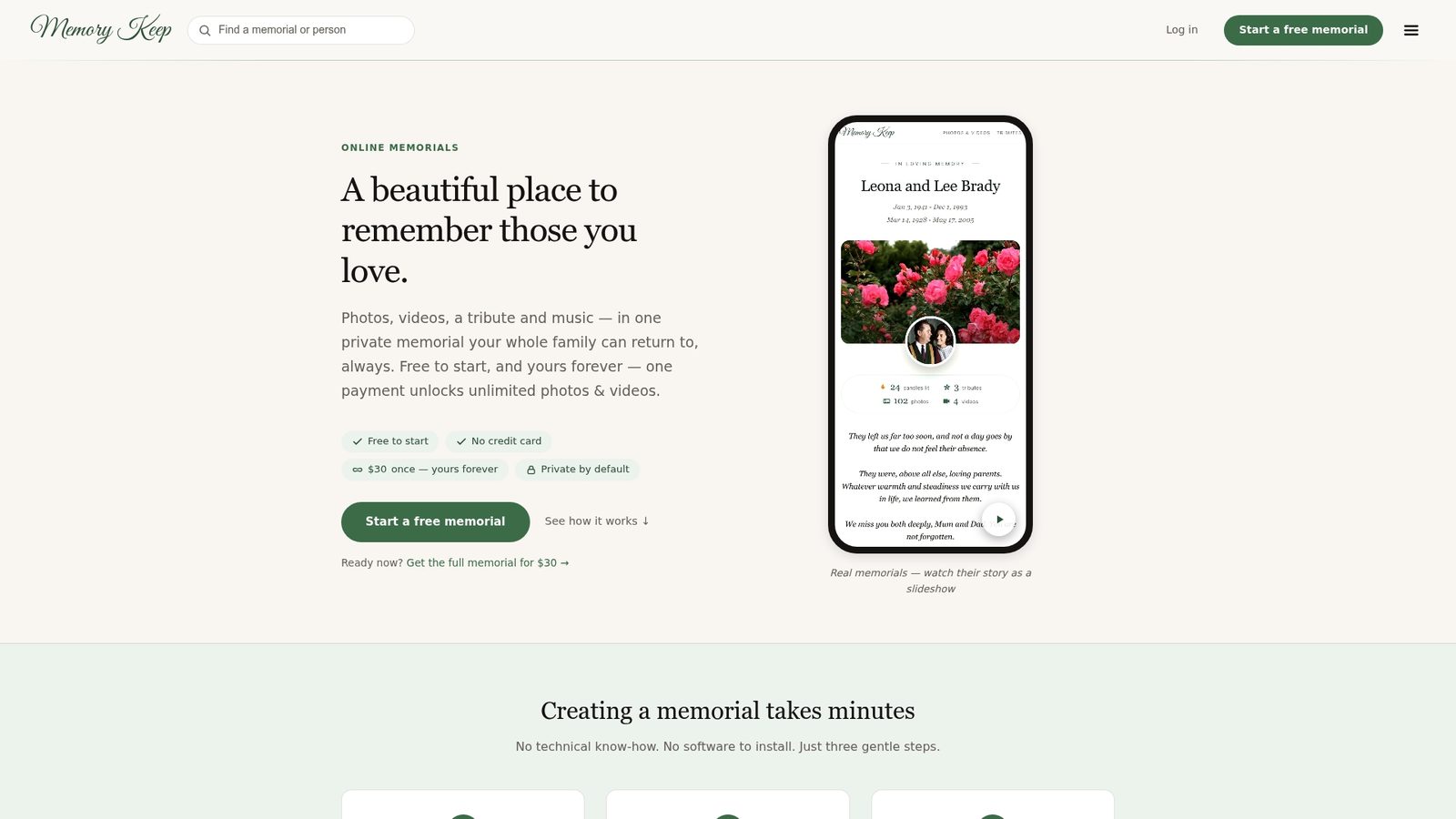
A typical family uses Memory Keep like this: one person writes and uploads the life story, adds a handful of photos, and shares the link. Within days, cousins and old friends have added their own images and left messages of remembrance that the original writer never could have written alone. See how a finished memorial looks with the Maurice Wizniak memorial as an example.
Visit Memory Keep’s help pages to create a memorial page, set your privacy preferences, and share the story with everyone who loved them.
Useful sources and further reading
| Resource | Best for |
|---|---|
| NPR Life Kit: 5 Tips for Writing a Memoir | Scene-based writing, honesty, and permissions guidance |
| When I Die Files: How to Write Your Life Story | Brave Draft technique, everyday detail, beginner workflow |
| Write Your Journey: How to Start Writing Your Life Story | Prompts, timed freewriting, and memory-harvest steps |
| Barnes Ghostwriting: Life Story Guide | Scope, timeline, and professional project phases |
| Life Story Examples: Robin Storey Ghostwriter | Vignette length guidance and real-life story samples |
| Memory Keep features | Platform publishing, multimedia, QR codes, and shareable links |
| Memory Keep blog | Grief resources, writing prompts, and platform tips |
| Creating a lasting digital memorial | Memorial design and what families value most |