

A memorial tribute is a short spoken or written message that honors someone’s life and what they meant to you, and this page gives you both the wording and the shape for one. You’ll find copy-ready lines for programs and cards, longer samples by relationship, and a simple four-part structure that turns a single memory into a full tribute you can actually deliver.
TL;DR:
- Short tribute lines are effective for programs and cards, with examples like “Loved beyond words” and “Forever in our hearts.”
- Use the four-part structure—introduction, life journey, memories and traits, and conclusion—to craft a balanced and meaningful tribute.
- Practicing aloud and marking pauses helps manage emotions and deliver a tribute confidently during emotional moments.
- Longer memorals should focus on a single impactful story rather than a list of achievements, making the tribute more personal.
- Full tributes can be preserved on memorial pages where stories, photos, and messages can be gathered over time for a lasting remembrance.
Table of Contents
- Memorial Tribute Examples by Relationship
- The Four-Part Structure That Turns a Memory Into a Tribute
- Templates You Can Fill In Right Now
- Matching Tone and Length to the Moment
- Delivering the Tribute Without Losing Your Nerve
- Beyond the Spoken Word: Where Longer Tributes Live
- Choose One Story Over a List of Achievements
- Preserve the Full Tribute With Memory Keep
- Sources
Memorial Tribute Examples by Relationship
Some tributes need only a line. Others need a minute or two of real substance. The samples below cover both, organized by who you’re honoring and where the words tend to land.
Short program and card lines work well when space is tight or when you need something for a printed program, a sympathy card, or an online memorial’s headline:
- “Loved beyond words, missed beyond measure.”
- “A life well lived, a heart that gave without limit.”
- “Forever in our hearts, forever part of our story.”
- “Gone from our sight, never from our love.”
- “A gentle soul who made everyone feel like family.”
Longer relationship-specific samples give you a starting sentence or two you can build on:
For a parent: “My mother taught me that kindness costs nothing and gives everything. Every recipe I cook, every letter I write, carries a little of her in it.”
For a partner: “We built thirty years out of small, ordinary Tuesdays, and I would choose every one of them again.”
For a sibling: “My brother was my first friend and my toughest critic, and I never once doubted he had my back.”
For a friend: “She had a gift for making the room feel warmer just by walking into it.”
For a grandparent: “Grandpa’s porch was the center of our whole family’s map. Every summer story starts there.”
For a colleague: “He made deadlines feel less like pressure and more like a shared project worth finishing well.”
For a pet: “Buddy greeted every single day like it was the best one yet, and somehow that made ours better too.”
Use the shorter lines on programs, cards, or as the opening headline of an online memorial page. Save the fuller samples for a eulogy, a guest book entry, or the first paragraph of a written tribute you’ll expand later.
The Four-Part Structure That Turns a Memory Into a Tribute
Funeral practitioners commonly point to a four-part structure for memorial tributes: introduction, life journey, memories and traits, and conclusion. It works because it gives grief a container without flattening it.
- Introduction (1 to 2 sentences, about 15 seconds): State your relationship and set the tone. “I’m David’s youngest son, and I want to share who he was outside of being my dad.”
- Life journey (3 to 5 sentences, 30 to 45 seconds): Hit the milestones that shaped them. Career, family, a defining move or decision.
- Memories and traits (4 to 6 sentences, 1 to 2 minutes): This is where the tribute breathes. One vivid story beats a list of qualities.
- Conclusion (2 to 3 sentences, 20 to 30 seconds): Close with gratitude or the legacy they leave behind. “Thank you for the twenty-six years. I’ll carry the rest.”
Pro Tip: Write the memories section first. The introduction and conclusion almost always come easier once you know what story you’re building toward.
Templates You Can Fill In Right Now
Sometimes the blank page is the hardest part. Try answering a few of these before you write a word:
- What’s a phrase they said often?
- What did they smell like, cook, or always have on hand?
- What’s one thing they taught you without meaning to?
- When did you last laugh together?
- What would they want people to remember on a hard day?
- What small habit of theirs do you now catch yourself doing?
- What did they worry about, and how did they handle it?
- Who did they light up around?
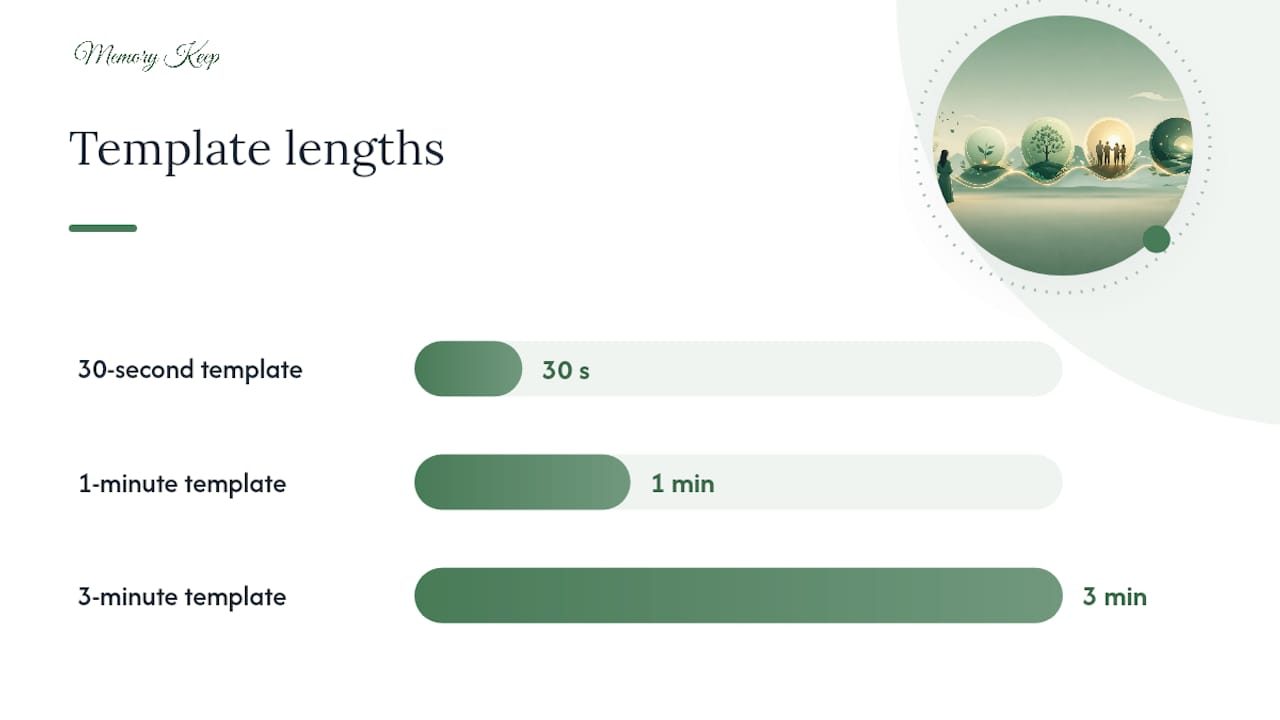
30-second template: “[Name] was my [relationship], and [one specific trait]. I’ll always remember [one short memory]. [Name], thank you for [what they gave you].”
1-minute template: Introduction sentence, one milestone, one story with dialogue or a specific detail, and a closing line of gratitude.
3-minute template: Full four-part structure with two memories instead of one, plus a line acknowledging others who are grieving alongside you.
Pick your tone before you trim. Cutting a formal tribute down to 30 seconds usually reads stiff; cutting a conversational one down usually just tightens it.
Matching Tone and Length to the Moment
A memorial tribute can be formal, poetic, or conversational, and the right choice depends less on the venue than on how you actually spoke to the person.
Program-line examples (one sentence, any setting):
- “She lived generously and loved fiercely.”
- “A quiet strength that held our whole family together.”
- “The best stories always started with his name.”
Conversational examples (1 to 2 minutes, best for close friends and family gatherings):
- “Mom had this laugh you could hear three rooms away, and honestly, I’d give anything to hear it one more time.”
- “Jake was the guy who showed up at 6 AM to help you move, no questions, just coffee and a truck.”
Formal examples (2 to 4 minutes, better suited to larger services or workplace memorials):
- “Throughout his forty years at the firm, he was known not only for his precision but for his patience with anyone learning the job.”
- “Her contributions to this community will be measured in the people she mentored long after she stepped back.”
Choose conversational when the room knew the person well; choose formal when the audience is broader or more mixed.
Delivering the Tribute Without Losing Your Nerve
Practicing out loud, not just reading silently, is what practitioners consistently recommend for managing emotional blocks during a tribute. Time yourself once through. Most people speak at roughly 120 to 150 words a minute, so a one-page tribute usually lands close to two minutes.
Mark pauses on your printed copy, and bring that printed page even if you know it by heart. If you tear up, pause, breathe, and keep going. Arrange a backup reader in advance in case you need to hand it off.
Pro Tip: Practice the hardest sentence, the one most likely to catch in your throat, five separate times before the day. Familiarity blunts its power just enough to get you through it.
Beyond the Spoken Word: Where Longer Tributes Live
A spoken tribute rarely captures everything you want to say. Memory Keep’s writing helpers can assist when you’re stuck on wording, and a shareable memorial page gives that longer version somewhere permanent to live. Families often collect guest messages that add stories the speaker never knew, turning one tribute into a fuller online memorial over time.
Choose One Story Over a List of Achievements
A tribute notice is a personal expression, not a resume, and one well-chosen story often connects more than a paragraph of general praise ever could. We’d rather you write two honest sentences in your own voice than borrow five polished ones that don’t sound like you.
Use the samples here as scaffolding, not a script. Swap in your own words, your own person, your own memory.
— Memory Keep
Preserve the Full Tribute With Memory Keep
A eulogy lasts a few minutes. The story behind it deserves longer. Memory Keep gives you a shareable memorial page where the full version of your tribute can live alongside photos, videos, and messages from everyone who knew them, with a one-time upgrade for unlimited storage instead of a recurring fee.

Families use these pages to collect the stories a single spoken tribute can’t hold. A grandparent’s page might grow to include a grandchild’s memory added months later; a pet memorial might gather photos from every person who ever fostered or walked that dog. Guests can leave their own messages directly on the page, and you can print a keepsake photo book once the collection feels complete.
Browse a sample memorial page to see how a full tribute looks once it’s preserved, or start building one today at Memory Keep.

Sources
For more wording options, Memory Keep’s own collection of memorial tribute quotes covers phrasing for cards, programs, and online posts. If you’re weighing formats beyond a spoken tribute, Honored Words outlines several alternatives, including video tributes and legacy letters. For families supporting a grieving child through the process, this guide on grief-supporting books offers a helpful starting point.
- Funeral tribute examples: write a meaningful goodbye | Aura
- Writing and presenting a memorial tribute: Celebrating a loved one’s life | James H. Cole