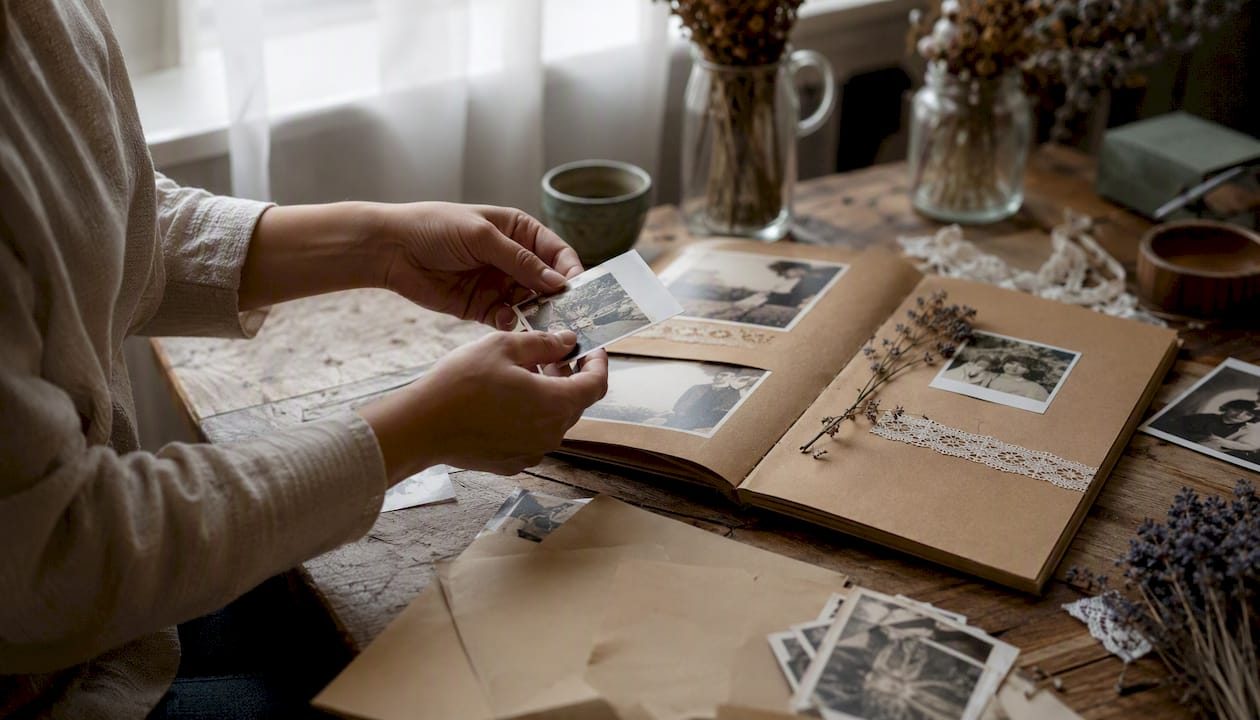

For most families, the fastest and most lasting option is a hardcover layflat photo book ordered from a memorial-focused print service. If you want a collaborative keepsake built with contributions from everyone who loved them, start with a shared Memory Keep memorial page and export a printed book when the content is ready.
Before you do anything else, gather these three things:
-
Several photos you already love (don’t wait for perfect)
-
The full name and birth/death dates for the cover
-
One short line you’d want on the front: a name, a date range, or a favorite phrase they used
Which path fits your timeline?
-
Under 2 weeks (service keepsake): Order a 20–40 photo display book from a memorial print service. A short display book is realistic in 1–2 weeks, according to Restory’s memorial album guide.
-
4–8 weeks (collaborative keepsake): Invite family to contribute photos and memories to a shared memorial page, then export and print a fuller tribute album when contributions are in.
Table of Contents
What route should you take for a memorial photo book?
Three practical paths exist, and the right one depends on your timeline, your comfort with design, and how many people you want to involve.
Memorial-focused print services handle design, layout, and printing for you. You supply the photos and a few details; they produce a finished hardcover book. This is the right choice when time is short or when the emotional weight of designing it yourself feels like too much. Tribute book services typically offer design assistance, Q&A prompts to gather stories, and hardcover printing with a digital PDF included.
General photo-book printers give you more control over layout and cost less per page, but they require you to do the design work yourself using their templates. They work well for families who have a clear vision and enough time to build the book carefully.
DIY and scrapbook is the most personal route and the most time-intensive. WikiHow’s memory book guide walks through picking a theme, gathering materials, and writing captions step by step. It suits someone who finds the hands-on process meaningful rather than burdensome.
A collaborative approach, where you gather photos and stories from everyone who knew the person, creates a fuller memorial and can ease grief by giving people a way to contribute. Give contributors a specific prompt (“Share one photo and one sentence about a moment you remember”) rather than an open-ended request. People welcome the invitation; they just need a clear, low-effort way to respond.
Which book type and size work best for a memorial?
Not all photo books are built the same, and the format you choose shapes how the finished tribute feels to hold and display.
Layflat vs. standard binding is the most important decision. Layflat binding allows pages to open completely flat, so a photo spread across two pages shows no crease down the center. For a memorial book displayed at a service or kept on a coffee table, layflat is worth the added cost.
| Format | Best for | Typical size | Page range |
|---|---|---|---|
| Hardcover layflat | Long-term keepsake, display | 10×10 or 11×8.5 in | 40–120 pages |
| Hardcover standard | Service keepsake, gifting | 8×8 in | 20–60 pages |
| Softcover | Budget option, quick print | 8×8 or 8×10 in | 20–40 pages |
| Scrapbook/album | DIY, hands-on tribute | Varies | Unlimited |
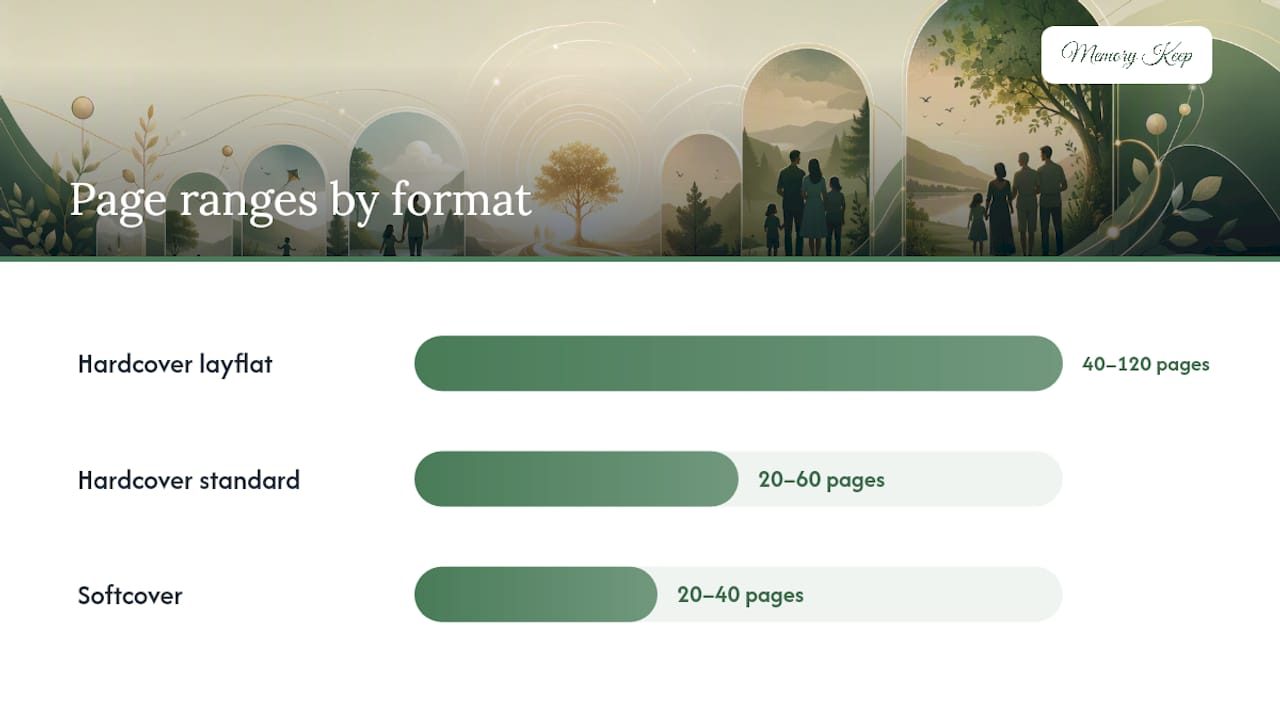
Size guidance: An 8×8 hardcover works for a service keepsake with 20–40 photos. A 10×10 or 11×8.5 landscape format suits a family-collaborative life story with 60–120 images, where full-bleed spreads and breathing room matter. Larger formats and layflat binding are the standard recommendation for coffee-table memorial books.
Cover choices: A photo-wrap hardcover (where a photo prints directly on the cover) feels immediate and personal. A cloth or linen-finish cover with foil-stamped text communicates permanence and formality. For a book meant to last decades, a cloth or leather-like finish holds up better than a photo-wrap surface.
Extra pages: Most print services include a base page count (often 20–40 pages) and charge per additional spread. Check this before you finalize your layout.
How do you choose and organize photos for a memorial book?
Curation matters more than quantity. Forty strong images tell a life more clearly than two hundred. Memory Keep’s photo selection guide recommends favoring emotional resonance over technical perfection: a slightly blurry photo of a real moment beats a sharp but generic one.
A simple triage workflow:
-
Collect everything into one folder (ask family to send photos to a shared link or email address)
-
Mark favorites on a first pass without overthinking
-
Run one edit pass to remove duplicates and very low-quality images
-
Aim for 40–80 keepers for a full keepsake book
Organizing frameworks give the book a shape readers can follow:
-
Chronological works for a full life story and is the easiest for contributors to understand
-
Chapter-based (childhood, career, family, hobbies) works well when the person had distinct life phases worth honoring separately
-
Relationship-based sections (from a spouse, from children, from friends) work beautifully for collaborative books
Captioning tips: A good caption answers who, where, when, and why it mattered, in one or two sentences. First-person quotes (“She always said this was her favorite place”) add warmth. Neutral captions (“Summer 1987, Lake Tahoe”) work when you don’t have the full story. Acid-free paper is recommended for any book you intend to keep long-term, as noted in WikiHow’s memory book steps.
Pro Tip: When asking family to contribute, give them a deadline and a specific format: “Please send one or two photos and one sentence by [date] to this link.” Vague requests get vague responses; a clear ask gets results.
How do you design a memorial book that feels personal?
Tone-first design means choosing fonts, colors, and layouts that reflect the person, not just the occasion. A quiet, minimal palette with serif fonts suits a formal tribute. Warmer tones and handwritten-style fonts work for someone whose personality was expressive and joyful.
Layout choices to consider:
-
Single full-page photos for the strongest images
-
Two-photo story spreads with a short caption between them
-
Pull-quote pages where a favorite saying or short memory fills most of the page
-
Timeline pages that mark key years with a small photo and a date
Cover text options break down simply: name plus years is the most timeless choice. A short epitaph or a favorite phrase they used adds personality. A long quote risks feeling crowded on a cover. When in doubt, less text on the cover lets the photo or finish speak.
Avoid crowding pages. White space is not wasted space in a memorial book. It gives the eye somewhere to rest and gives the photos room to carry their weight.
What materials make a memorial photo book last?
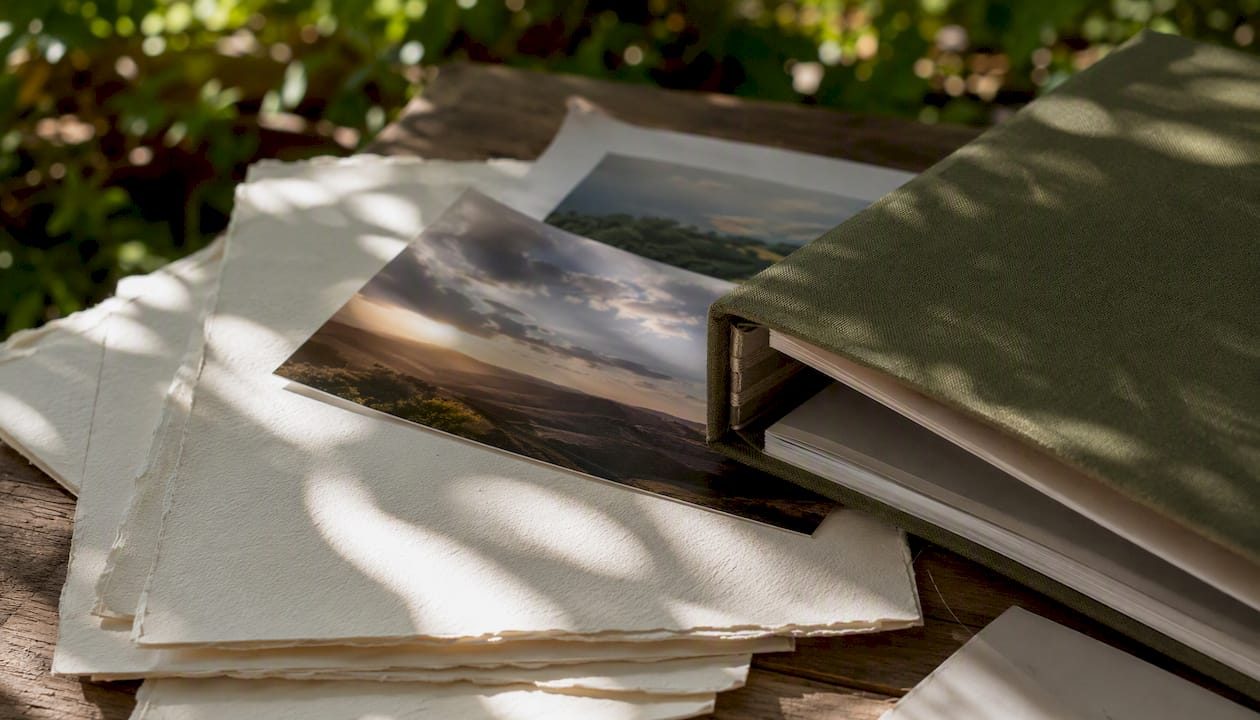
Archival quality has a specific meaning. Acid-free paper resists yellowing over decades. Pigment-based inks hold color far longer than dye-based inks, which can fade within years under normal light exposure. Sewn binding holds pages securely through decades of handling; perfect-bound (glued) spines can crack with heavy use.
| Material | Archival choice | Why it matters |
|---|---|---|
| Paper | Acid-free | Prevents yellowing, holds detail |
| Ink | Pigment-based | Resists fading for decades |
| Binding | Sewn (Smyth-sewn) | Pages stay secure with repeated use |
| Cover | Cloth or linen hardcover | Durable, resists moisture and wear |
| Finish | Matte or lustre | Matte reduces glare; lustre balances depth and durability |
Storage: Keep the book away from direct sunlight and humidity. A protective slipcase adds a meaningful layer of preservation. A cool, dry shelf is enough for most homes.
What does ordering a memorial photo book cost and how long does it take?
Pricing varies by format and service. A short softcover display book (20–40 pages) typically runs in the lower price range. A premium hardcover layflat keepsake with 60–120 pages sits in the mid-to-higher range, and tribute services that include design assistance charge more than self-service printers.
What to budget for beyond the base price:
-
Additional pages beyond the base count (charged per spread)
-
Color correction or photo restoration for older images
-
Expedited shipping if you need the book for a service
-
Sales tax, which varies by state
Turnaround times follow a predictable pattern: production typically runs 5–15 business days, plus 2–7 days for standard shipping. Rush options can compress production, but expedited shipping adds cost. Restory’s timeline guidance notes that a 20–40 photo display book is achievable in 1–2 weeks, while a thoughtful keepsake with photo restoration usually needs 4–6 weeks.
Proofing: Most services provide a soft-proof PDF before printing. Review it carefully for spelling, date accuracy, and photo cropping. Some services offer a physical proof for an added fee. Before ordering from any vendor, check their Trustpilot or BBB reviews to confirm reliable delivery and print quality.
How do you pair a printed book with a digital memorial?
A printed memorial photo book holds what you could gather in the weeks after a loss. A digital memorial holds everything else: audio recordings, video clips, additional photos that arrive months later, and messages from people who couldn’t attend a service.
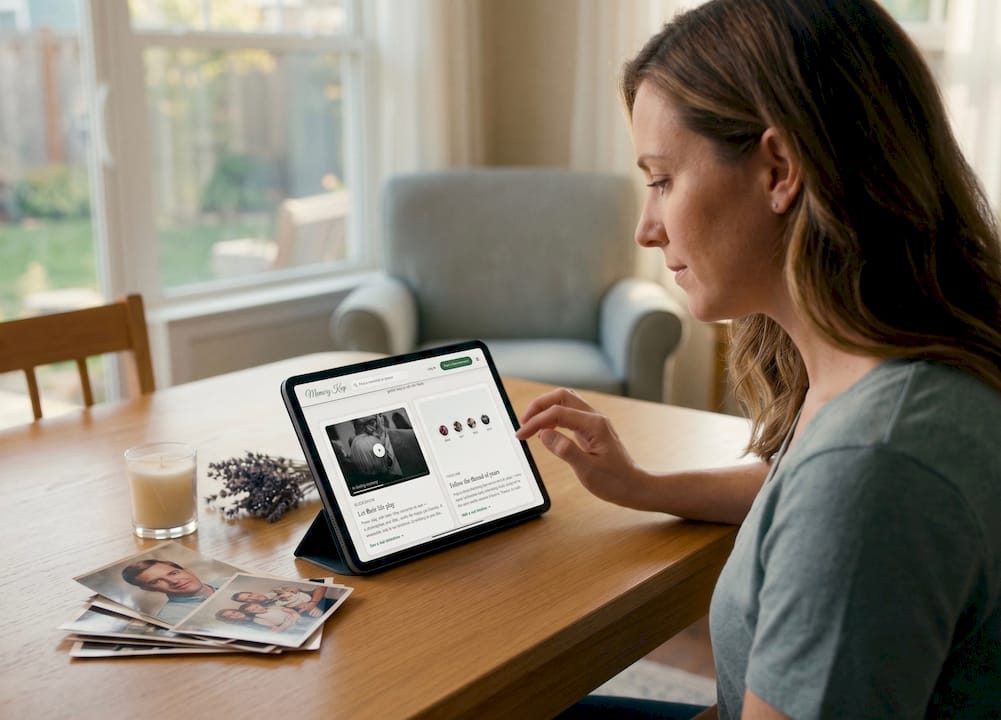
Hosting a lasting digital memorial on Memory Keep lets family and friends contribute from anywhere, at any time. Once contributions are in, you can export the content and use it to build or update a printed keepsake.
Adding a QR code to your printed book connects both worlds. Place a QR code on the book’s opening page or back cover with a short note: “Scan to view more photos, videos, and messages.” Memory Keep generates a unique shareable link for every memorial, and that link can become a QR code for memorials you print directly into the book.
Pro Tip: Place the QR code on the inside front cover with two lines of text: the memorial’s URL written out and “Scan to hear their voice and see more memories.” Spelling out the URL means older family members can type it in if they prefer.
Privacy settings on Memory Keep let you choose between a public memorial anyone can find and a private link shared only with family. Either way, the printed book and the digital page reinforce each other.
What page sequences can you use as a starting template?
Three sequences cover most situations. Copy whichever fits your project.
A. Short display book (20–40 images, service keepsake)
-
Cover: name, years, one photo
-
Page 2: brief biography (3–5 sentences)
-
Pages 3–18: chronological photos with short captions
-
Final spread: a favorite quote or a closing message from the family
B. Family-collaborative life story (60–120 images)
-
Cover and title page
-
Chapter dividers: childhood, young adult years, family life, later years
-
Feature spreads: 2–3 pages per chapter with the strongest images
-
Contributor pages: short memories from family members, each with a photo
-
Closing page: a message of remembrance
C. Themed chapters (career, family, hobbies)
-
Open with a full-page portrait
-
One chapter per theme, each with a short intro paragraph and 8–15 photos
-
Pull-quote pages between chapters to pace the reading
-
Final page: a guest messages insert or a QR code to the digital memorial
The strongest photos belong near the front and at the end. Quieter, contextual images work well in the middle. Breathing pages (mostly white space with a single quote or date) prevent the book from feeling rushed.
Key Takeaways
A hardcover layflat memorial photo book with acid-free paper and pigment inks, built from curated photos and family contributions, is the most lasting tribute you can create.
| Point | Details |
|---|---|
| Choose layflat for display | Layflat binding opens flat across spreads, making it ideal for service display and coffee-table keepsakes. |
| Curate, don’t collect | Forty strong, emotionally resonant photos tell a life more clearly than a large unedited collection. |
| Plan for your timeline | A 20–40 photo display book is achievable in 1–2 weeks; a collaborative keepsake with restoration needs 4–6 weeks. |
| Prioritize archival materials | Acid-free paper, pigment inks, and sewn binding extend a book’s life to 50 years or more with basic care. |
| Memory Keep extends the book | Start a free memorial page to gather contributions, then export and print a keepsake when the content is ready. |
A note on the work of remembering
There is no single right way to honor someone you’ve lost, and there is no right speed. A simple display book assembled in a week carries as much love as a six-month family project. What matters is that the people who loved them have something to hold.
We’ve seen families use the process of building a memorial photo book as a way to reconnect, to share stories they hadn’t told each other, and to find that grief is a little lighter when it’s shared. A photo with a single sentence is a valid and meaningful contribution. You don’t need a perfect archive to start.
Treat the process as both memory preservation and family connection. The book is the artifact; the conversations it starts are the real gift.
Memory Keep helps you gather, preserve, and print
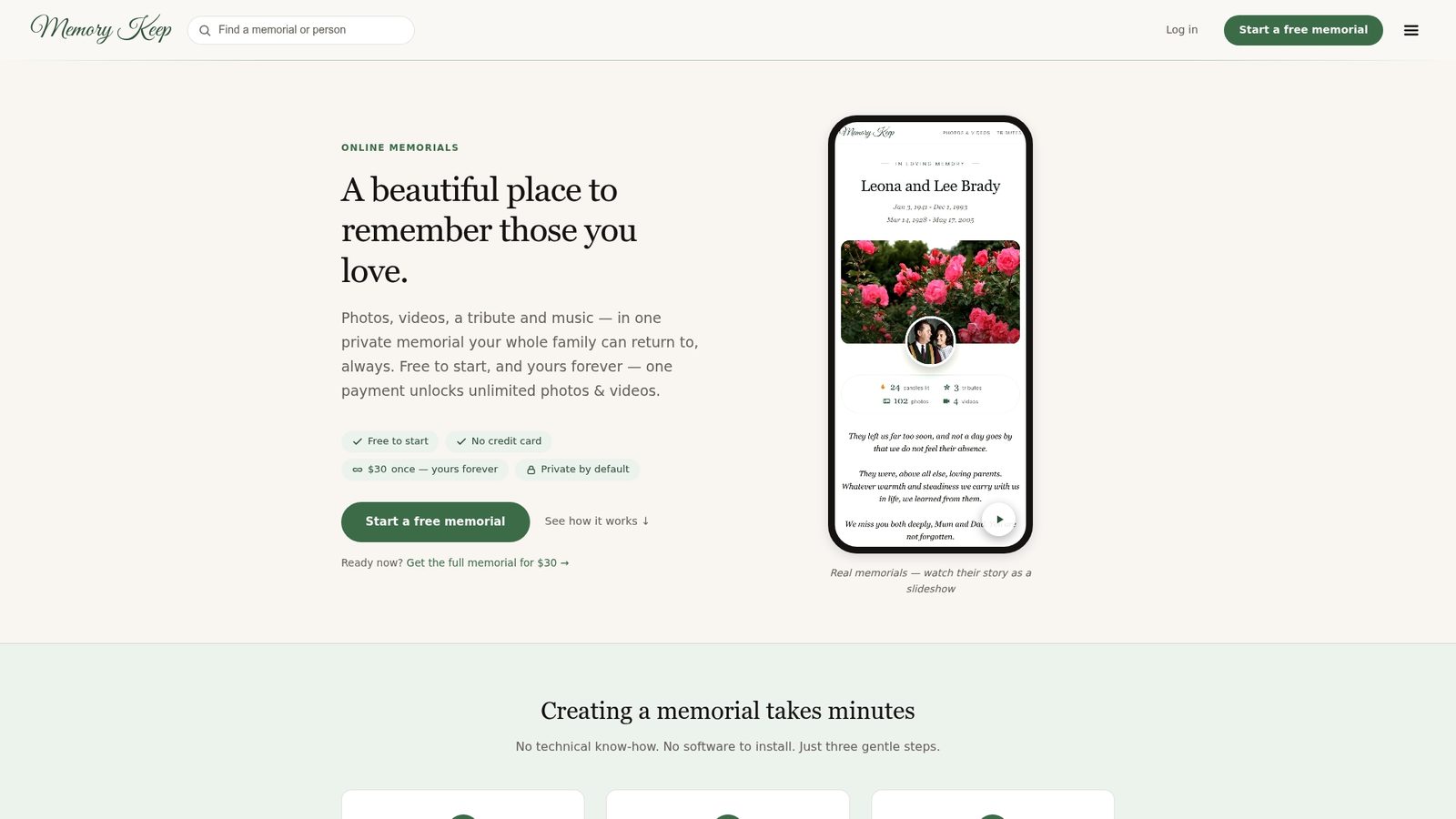
Memory Keep is built for exactly this moment. Create a free memorial page, invite family and friends to upload photos, share memories, and leave messages of remembrance from anywhere in the world. When contributions are in, export a keepsake photo book or slideshow video directly from the platform.
The one-time $15 upgrade unlocks unlimited photo and video storage, collaborative uploads, a unique shareable link, and a QR code you can print into the book’s pages. Explore the full feature set at Memory Keep’s features page, then create a free memorial to start gathering what matters most.