“In memoriam” means “in memory of,” and it works as a heading for tributes, engravings, or dedications. Three lines you can use right now: “Forever in our hearts,” “Loved beyond words,” and “Gone but never forgotten.” Choose one that fits the tone you want, whether that is quiet and formal or warm and personal.
TL;DR:
- Personalization and specific details about the deceased make tributes more authentic and memorable, rather than relying on generic phrases or clichés.
- Space constraints on headstones, jewelry, and plaques require concise wording, often limited to names, dates, or short phrases, with line breaks used to emphasize key sentiments.
- The tone and theme of the tribute should match the setting and relationship, with religious, nature, legacy, or humor themes tailored to the individual and occasion.
- Length and structure of spoken tributes should stay within three to five minutes, focusing on a clear introduction, a meaningful anecdote, impact, and a memorable closing.
- When designing printed or digital memorials, clarify contribution guidelines, respect privacy, and verify details to ensure respectful, accurate, and culturally appropriate wording.
Table of Contents
- How to choose tone, length, and format for your wording
- Short wording and inscription-ready lines by use
- Sample tributes by relationship
- [Theme-based wording for faith, nature, legacy, and beyond can inspire your memorial tribute; for creative phrasing ideas, see these veteran tribute shirt ideas for families.](#theme-based-wording-for-faith-nature-legacy-and-beyond-can-inspire-your-memorial-tribute-for-creative-phrasing-ideas-see-these-veteran-tribute-shirt-ideas-for-familieshttpsbrassandbunkercomblogsnewsveteran-tribute-shirt-ideas)
- Short-tribute and eulogy structure plus spoken-length guidance
- Practical formatting tips for space-limited memorials and engravings
- Using wording in memorial books and online memorial pages
- Guidance on legal and ethical considerations when writing in memoriam wording
- Advice on incorporating cultural or religious customs into in memoriam wording
- Why personal detail matters more than perfect phrasing
- How Memory Keep helps you preserve the fuller story
- Sources
- FAQ
How to choose tone, length, and format for your wording
The words you choose matter less than whether they sound like the person you lost. The Funeral Consumers Alliance emphasizes that personalization carries more weight than a generic template, and that families do best when they build wording around the deceased’s personality and values rather than reaching for the first phrase that sounds appropriate. A line that mentions someone’s laugh, their garden, or the way they answered the phone will always land harder than a phrase borrowed from a stranger’s memorial.
Length depends entirely on where the words will live. A program header might hold four or five words. An obituary line can stretch to a full sentence. A sympathy card gives you a paragraph, and a social post can hold a short story if you want it to.
- Program header or headstone: 3 to 8 words, simple and declarative.
- Obituary closing line: one sentence, often 10 to 20 words.
- Sympathy card: two to four sentences, warm and specific.
- Social media tribute: a short paragraph, personal in tone.
Personalization changes how a tribute feels. The Funeral Consumers Alliance notes that prioritizing one or two concrete details about the deceased, rather than relying on stock phrasing, produces tributes that feel authentic instead of interchangeable.
As for which phrase to lead with, “in memoriam” tends to read as formal and is common on program covers or engraved plaques. “In loving memory” feels more intimate and suits cards, obituaries, or anything spoken aloud. “In memory of” sits in between, neutral enough for almost any format.
Short wording and inscription-ready lines by use
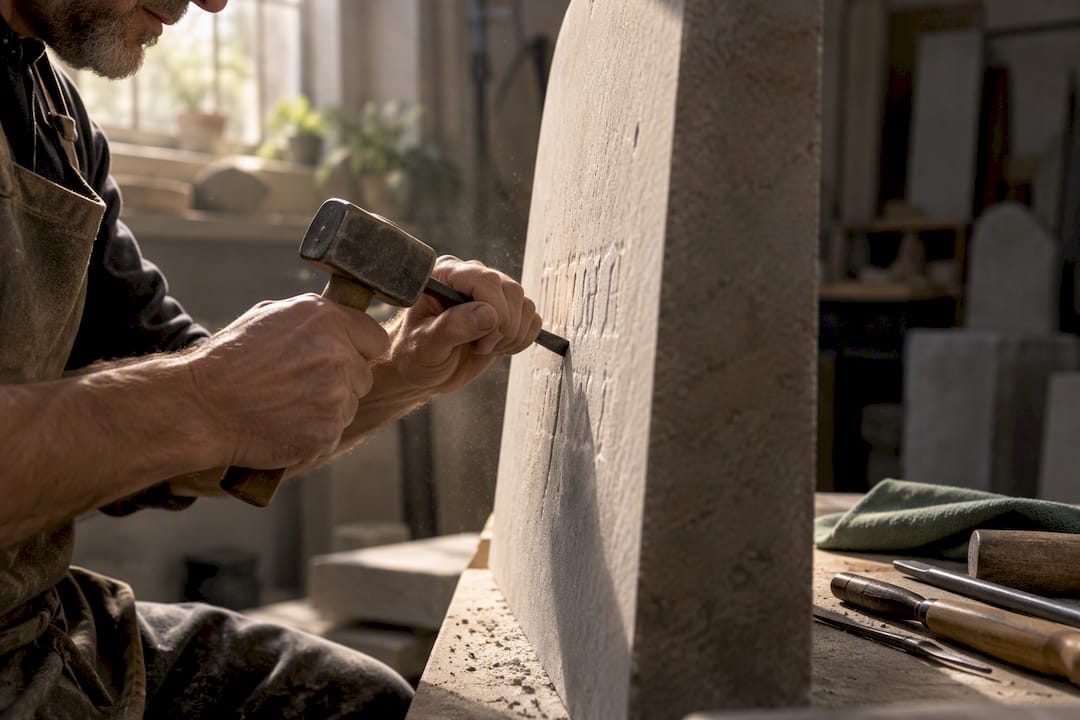
Space is the deciding factor for engravings, urns, and jewelry. A headstone might allow two lines of text, while a small memorial pendant might hold only a name and a date. Start with the shortest version of your message, then add detail only if room allows.
For headstones and grave markers, simple phrases carry the most weight:
- “Forever in our hearts”
- “Beloved father and friend”
- “Rest in peace, dear one”
- “Together again”
For cremation urns, where the inscription often sits on a small plate or band, shorter is almost always better:
- “At peace”
- “Loved always”
- “Home at last”
Memorial jewelry, such as lockets or engraved bracelets, usually fits only a name, a date range, or a single word like “Mom,” “Dad,” or “Always.” Bookmarks and memorial cards, by contrast, offer a little more room and can hold a full short verse:
- “Some people leave footprints on our hearts, and we are never quite the same.”
- “Loved deeply, missed daily, remembered always.”
When formatting an engraving, capitalize names and titles but keep the rest in standard case unless the engraver’s template requires otherwise. Break lines at natural pauses rather than mid-phrase, and skip unnecessary punctuation. A period at the end of a two-word phrase often looks heavier than the words themselves.
Pro Tip: Use line breaks intentionally to emphasize a short epitaph, rather than cramming every detail onto a single line.
Sample tributes by relationship
The right wording changes depending on who you are honoring. A tribute to a parent often leans on gratitude and guidance, while a tribute to a friend might lean on humor or shared history. Start with a short inscription, then build a slightly longer program or obituary line if the format allows.
- Parent: “You gave us roots and wings” or, longer, “She raised us with patience and humor, and taught us that home is wherever she was.”
- Partner or spouse: “My forever love” or “He was my best friend for forty years, and I will spend the rest of my life grateful for every one of them.”
- Friend: “A friend like no other” or “She showed up for everyone, every time, without ever being asked twice.”
- Child: “Our little light” or “He filled every room with wonder, and he still does, in every memory we hold.”
- Colleague: “A mentor and a friend” or “She led with kindness and taught the rest of us to do the same.”
- Pet: “Loyal to the very end” or “Every walk, every nap, every wag of the tail, we will miss all of it.”
The difference between a flat phrase and a memorable one is usually a single detail. Guides on memorial writing consistently point toward avoiding clichés in favor of a specific memory or trait, since a generic line about someone being “loved by all” says far less than a line about the way they hummed while cooking or always kept spare change for parking meters. Swap the abstract for the concrete, and the tribute will sound like the person, not like a form letter.
Theme-based wording for faith, nature, legacy, and beyond can inspire your memorial tribute; for creative phrasing ideas, see these veteran tribute shirt ideas for families.
Grouping wording by theme makes it easier to match the mood of the memorial rather than the relationship alone. Faith-based lines suit religious services or gravesites tied to a specific tradition: “Called home to rest” or “In God’s loving care.” Nature and serenity themes work well for outdoor memorials or anyone who found peace outdoors: “Returned to the earth she loved” or “At rest beneath the trees.”
Legacy and impact themes suit programs or obituaries for people known for their work or community role: “His work lives on in everyone he taught” or “A legacy of kindness that continues through us.” Rest and peace themes are the most universal, fitting almost any setting: “Finally at peace” or “Resting in eternal peace.”
Celebration or humor themes fit memorials that intentionally lean lighter, often for someone who lived that way themselves: “She’d want us laughing right now” or “Forever the loudest laugh in the room.”
- Match the theme to the setting, not just the person; a humorous line can feel out of place at a formal service even if it fits the deceased.
- Combine a theme phrase with one personal detail, such as naming a favorite trail for a nature theme or a specific joke for a humor theme.
Short-tribute and eulogy structure plus spoken-length guidance
A spoken tribute works best at 3 to 5 minutes, which comes out to roughly 400 to 750 words at a calm, conversational pace. That length gives you room for a real story without losing the room’s attention.
A simple four-part structure keeps a short tribute focused:
- Opener: Introduce your relationship in one or two sentences. “I had the privilege of calling her my sister for thirty-eight years.”
- Anecdote: Share one specific story that captures who they were. Keep it to a paragraph.
- Impact or legacy: Explain how they shaped the people around them. “She taught every one of us to show up, even on the hard days.”
- Close: End on a short, memorable line. “We will carry her with us, in every kitchen, every laugh, every Sunday dinner.”
For a ready-to-adapt version of this structure with full sample text, see our copy-ready memorial tribute examples.
Practical formatting tips for space-limited memorials and engravings
When space runs short, initials often replace full middle names, and year ranges (“1945 to 2026”) take less room than full dates. Hyphenated ranges save space on urns and small plaques.
- Ask your engraver or printer about character limits before finalizing wording.
- Request a printed or digital proof before the final engraving or print run.
- Count lines, not just words, since engraving space is measured by line.
Pro Tip: Choose a legible font over a decorative one, especially on small surfaces where every letter needs to remain readable.
Using wording in memorial books and online memorial pages
An in memoriam book works best with a clear theme and contributor guidelines set from the start, according to planning guidance from LSFellowship, which notes that gathering written tributes, photographs, and reflections into a coherent whole depends on deciding early what the book covers and who contributes.
An online memorial page can hold everything a printed book cannot, including full-length stories, photo collections, and ongoing messages from visitors. For guidance on assembling one well, see creating a lasting digital memorial.
- Set a contribution deadline so the book or page can be finalized without open-ended waiting.
- Share formatting rules (length limits, file types) so contributions arrive ready to use.
- Confirm permission from contributors before publishing personal stories or photos.
Guidance on legal and ethical considerations when writing in memoriam wording
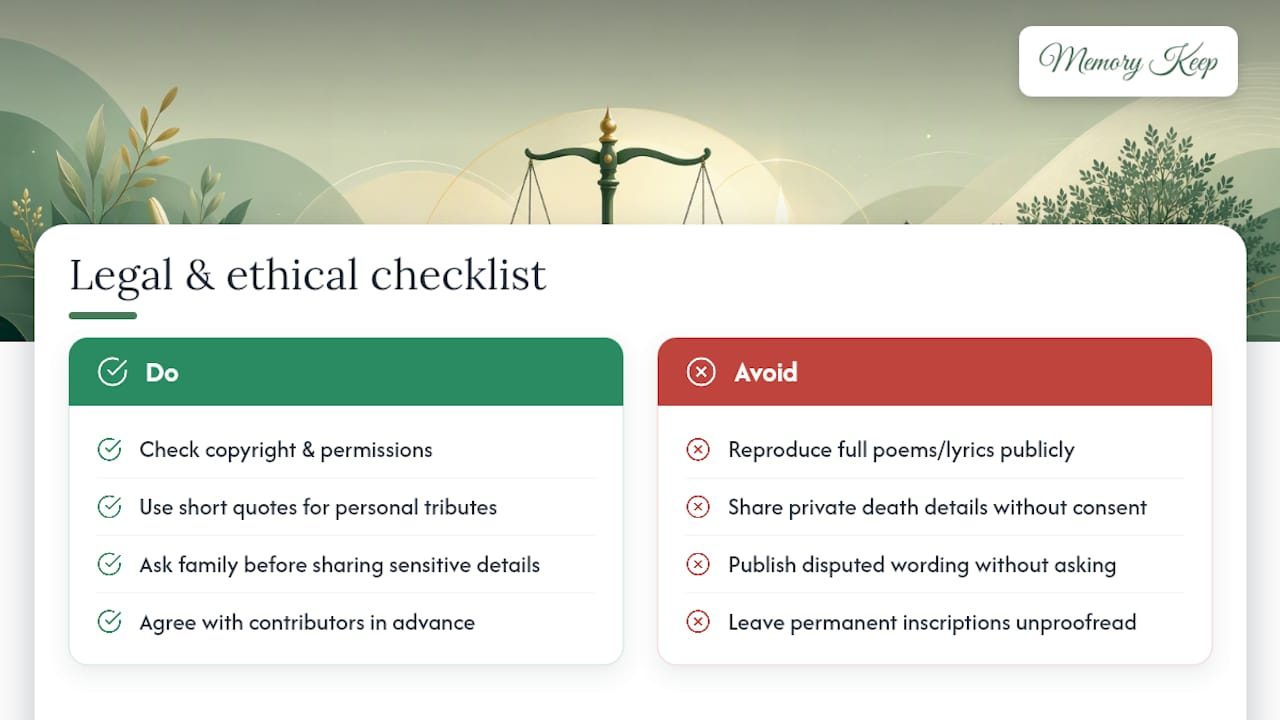
Wording that includes a quote, song lyric, or copyrighted verse deserves a second look before it goes on a headstone, program, or public memorial page. Short quotes used for personal, noncommercial tribute purposes are common practice, but reproducing a full poem or song lyric on a printed program or public website can raise copyright questions depending on how it is used and shared.
Sensitivity matters as much as permission. Before including a detail about how someone died, a private family matter, or a story involving another living person, ask whether that person or their close family would want it shared. A tribute meant to comfort should never become a source of surprise or hurt for someone reading it later.
If multiple family members are contributing wording for a shared memorial, program, or online page, agree in advance on what stays private. Grief affects people differently, and a detail one person finds honoring might feel exposing to another. When in doubt, ask before publishing rather than after.
Finally, if a tribute will appear somewhere public and permanent, such as an engraved marker or a shared online page, treat accuracy as part of the ethics of it. Names, dates, and details deserve a careful proofread, since a permanent inscription cannot be quietly corrected the way a draft can.
Advice on incorporating cultural or religious customs into in memoriam wording
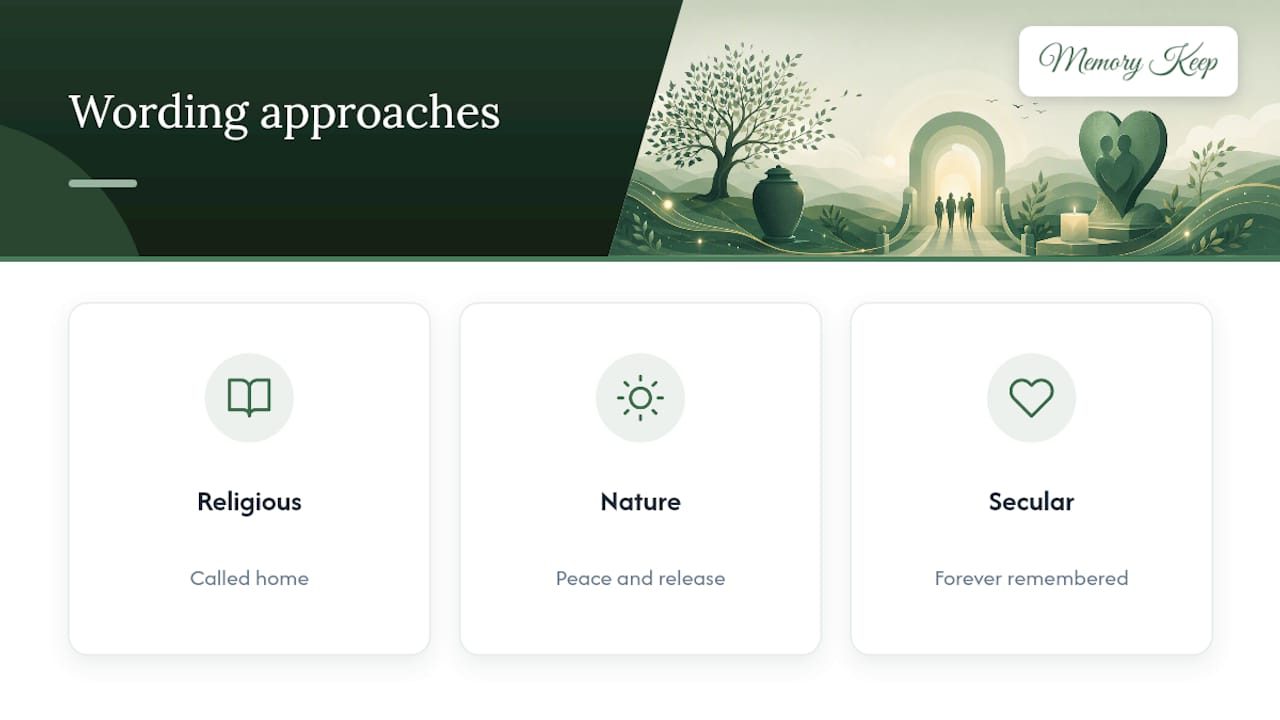
Many traditions carry their own conventions for memorial language, and following them shows respect for both the deceased and the community gathering to remember them. Christian memorials often include scripture references or phrases like “called home” or “in God’s care.” Jewish tradition frequently uses the Hebrew phrase for “may their memory be a blessing” alongside or instead of English wording. Buddhist and Hindu memorials may reference peace, rebirth, or release rather than rest, reflecting different beliefs about what follows death.
Secular or nonreligious families often prefer wording centered on memory and legacy rather than an afterlife, such as “Forever remembered” or “Her light continues through us.”
When you are unsure which customs apply, ask a family elder, a religious leader, or someone close to the deceased’s community before finalizing wording. A phrase that sounds universal to one tradition can feel inappropriate or even mistranslated in another, so it is worth confirming before it goes on something permanent like a headstone or program.
Why personal detail matters more than perfect phrasing
Every template in this guide is a starting point, not a script. The line that will mean the most is the one that sounds like the person you are remembering, not the one that sounds the most polished. Borrow the structure, then replace it with their voice, their habits, their particular way of loving people.
— Memory Keep
How Memory Keep helps you preserve the fuller story
A short inscription can only hold so much. When you want to keep the whole story, the photos, the voice memos, the messages friends send when they hear the news, a hosted memorial page gives that story somewhere permanent to live.
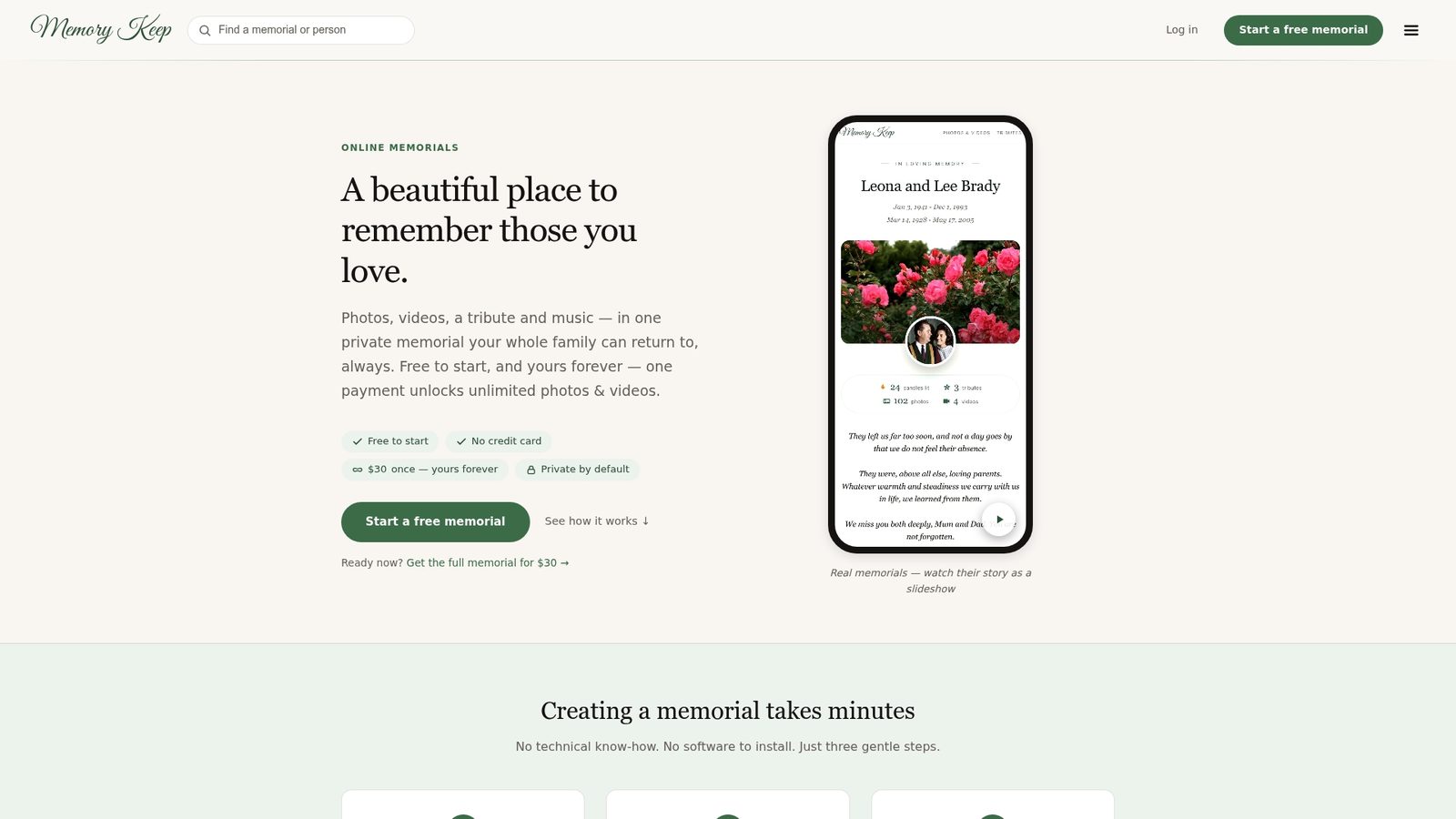
Memory Keep lets you build a page for a person or a pet, add unlimited photos and videos, and invite family and friends to add their own memories through one shareable link. The Free plan gets you started, and a one-time $15 upgrade unlocks unlimited storage and features for that memorial, with no subscription to manage afterward. See what’s included on our features page, or start a memorial page today.
Sources
- How long should a eulogy be? — Eulogy Expert
- Funeral Consumers Alliance — Advocates for Affordable Funerals
FAQ
What is the best remembrance message?
The best remembrance message is specific to the person, mentioning a trait, habit, or memory rather than a generic phrase. A line like “She never left without offering you coffee first” says more than “She will be missed.”
What is a good message to write for someone who has passed away?
A good message names your relationship, includes one honest detail about who they were, and closes with how they will be remembered. Keep it short for cards or programs, and let the specific detail carry the emotional weight.
What should I write in memoriam?
“In memoriam” wording works best as a short, formal phrase such as “In loving memory of” followed by the name and years lived. It commonly appears on programs, engravings, and dedications rather than in longer personal messages.
What is a good quote for someone who passed away?
A good quote reflects the person’s beliefs or personality rather than a generic sentiment, so a nature lover’s tribute might reference the outdoors while a faith-based tribute might reference scripture. Choose a phrase that fits the setting, whether that is a formal service or a quieter family gathering.