A collaborative memorial page is a single online space where many people add to the story of someone who has died: photos, videos, written tributes, songs, and messages. No one person has to carry the whole memory. A sister adds the childhood pictures, a coworker shares the story nobody else knew, and a cousin across the ocean leaves a note at midnight. Together, you see the whole of a life.
This guide explains what makes a memorial truly collaborative, how to set one up gently, what to ask others to contribute, and how to keep it kind and private. It is written for families who are in the first weeks of loss and for those who are creating a lasting tribute months or years later, for a person or for a pet.
TL;DR
- A collaborative memorial page gathers photos, stories, and messages from everyone who loved someone, in one shared place, through one link.
- Start small: add a few photos and a short tribute, then invite two or three people before you share it widely.
- Make it easy to contribute. The fewer steps between a friend and a memory, the more memories you will receive.
- Decide early who can see the page, who can add to it, and what happens if something painful is posted.
- Memory Keep offers a free plan to begin and a one-time $15 Full plan per memorial, with no subscription or renewal.
Table of Contents
- What makes a memorial page collaborative
- Why remembering together helps
- Collaborative memorial ideas that bring people in
- How to start, step by step
- What to put on a tribute page
- Making it easy for guests to contribute
- Privacy, boundaries, and difficult moments
- Our perspective: a memorial belongs to everyone who loved someone
- Starting a collaborative page with Memory Keep
- Joint memorials and family stories
- Keeping the page alive over time
- FAQ
- Sources
What makes a memorial page collaborative
Many memorial pages are really single-author tributes. One person writes the obituary, picks the pictures, and everyone else reads. That can be right, especially in the first days. But a collaborative page is built differently. It is designed so that other people can give something back.
In practice, a collaborative memorial page usually has four parts:
- A shared link. One address you can send by text, email, or printed card, so anyone, anywhere, can find the page.
- Visitor messages. A place for people to leave words of remembrance without needing to write a formal tribute.
- Shared uploads. The ability for family and friends to add their own photos and videos, not only to view yours.
- One keeper. Someone who looks after the page, welcomes contributions, and keeps the tone loving.
That last point matters. Collaboration does not mean chaos. The most tender memorial pages we see in the idea of a shared space have a quiet host, often the person closest to the loss, who sets the tone and lets others fill in the rest.
Why remembering together helps
Grief arrives without warning and often lingers in the questions we cannot answer alone. Did I say enough? What was she like before I knew her? Why do I only have these few pictures?
A page that many people contribute to can answer some of those questions. Grief expert David Kessler writes that guilt, self-blame, and shame often walk together in grief, and that the work is to release the guilt so we can reach the pure grief underneath. Hearing other people describe the person you lost, with their humor, their stubbornness, their small kindnesses, does not erase the what-if thoughts. But it can set them beside a bigger, truer picture of a whole life.
There is a quieter benefit too. People who are grieving often want to help and do not know how. If you are wondering what to say to someone in mourning, our guide on what to say when someone dies can help. Inviting them to add a photo or a memory gives them something real and loving to do. Our article on supporting a grieving friend explores this idea further.
If you are carrying a heavy load of grief yourself, a collaborative page is not a substitute for support. A licensed counselor can help you through the harder days, and this guide to supporting loved ones through grief offers a compassionate place to start.
Collaborative memorial ideas that bring people in
The blank page is the hardest part, for you and for your guests. Specific invitations work far better than a general request to share memories. Here are ideas that have a clear, easy first step.
Ask for one photo and one sentence
A request like send one favorite photo and one sentence about why you love it is small enough that people say yes. Most will send more once they begin.
Build a timeline together
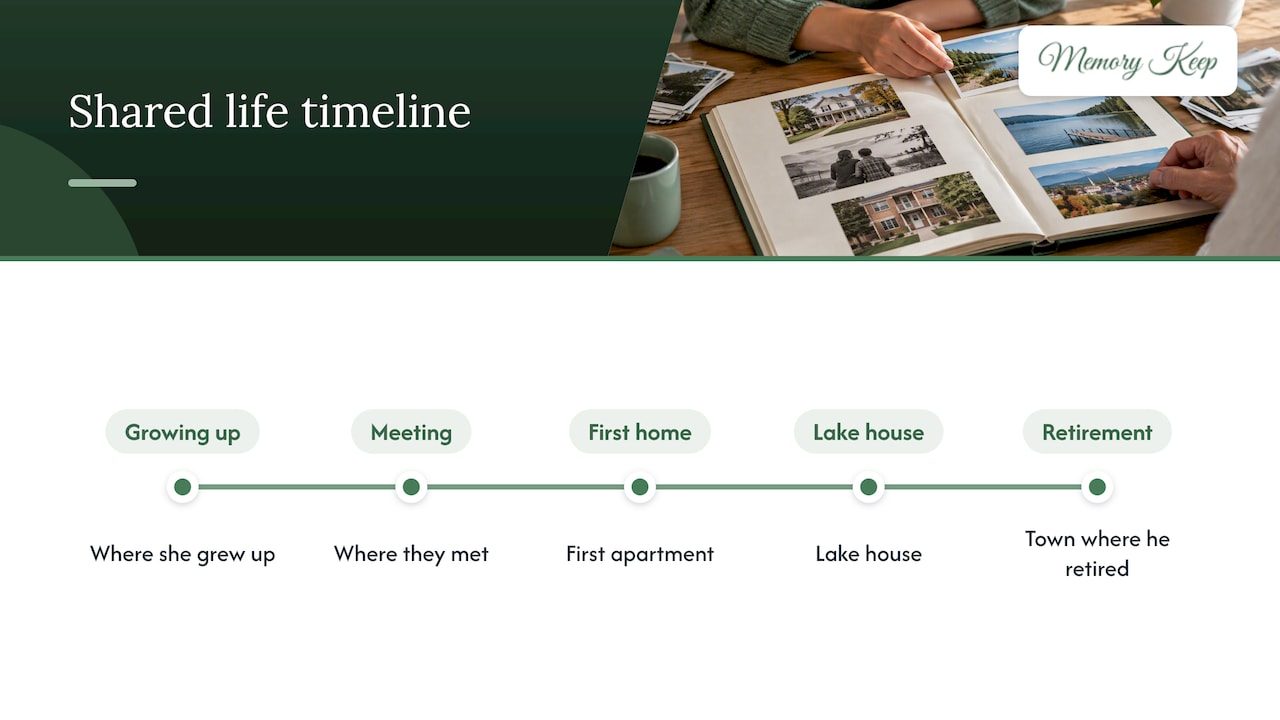
Invite relatives to place memories on a map or timeline: where she grew up, where they met, the first apartment, the lake house, the town where he retired. Memory Keep includes interactive maps of life events, so a trip, a move, or a favorite place becomes part of the story. Different people hold different chapters, which is exactly why a shared page works.
Gather the voices
Audio can be the most precious thing on a page. A voicemail, a recorded laugh, a story told at a holiday table. Ask family to look through their phones for short recordings. Memory Keep supports audio alongside photos and video.
Create a music collection
Ask everyone to name one song that makes them think of the person. A curated list becomes a soundtrack to the page. Memory Keep includes a music library organized by feeling, which helps when you cannot find the words and only know that you want something tender or hopeful.
Collect recipes, sayings, and traditions
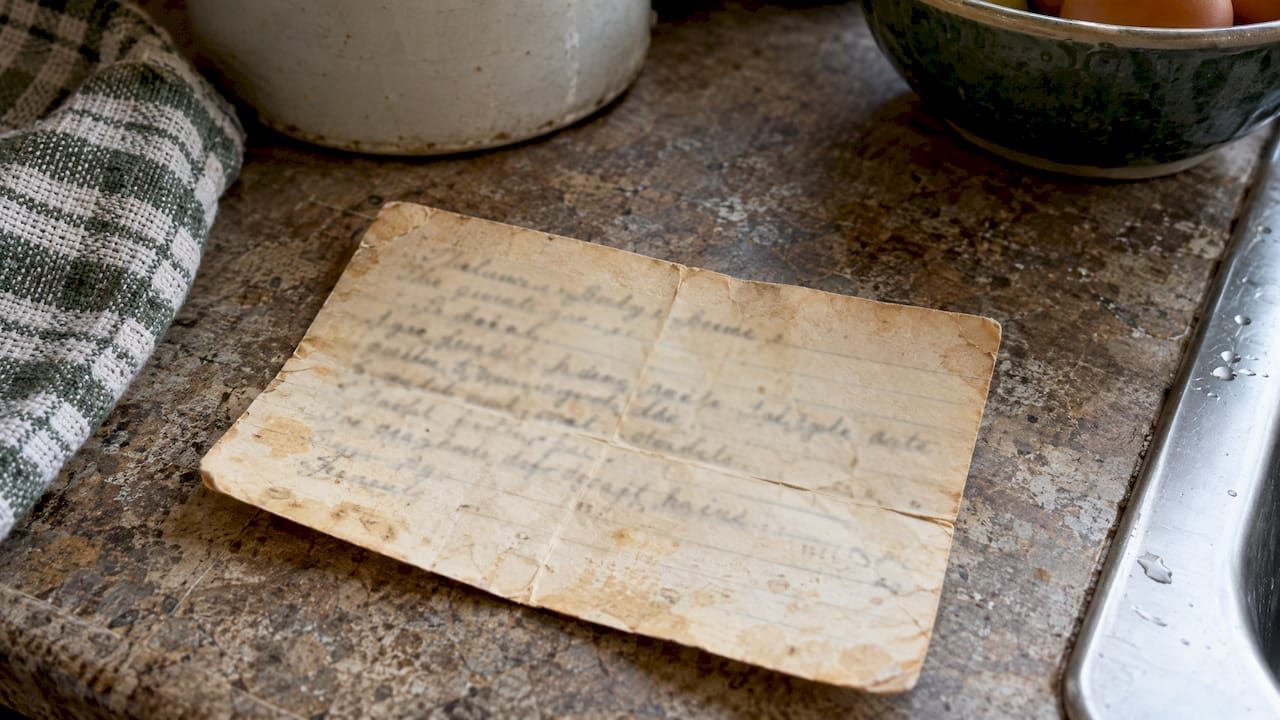
A handwritten recipe card, a phrase the person always used, the way they signed their name. These small things are often what people miss most, and they are rarely captured in an obituary.
Hold a remembrance prompt on the anniversary
Send the link again on a birthday or the anniversary of the death, with a gentle invitation to add one more memory. The page then becomes a place to return to, not a one-time project.
For a pet
Pets belong in families, and their loss is real grief. Ask everyone who knew your dog or cat to contribute: the vet tech who loved them, the neighbor who gave treats, the child who grew up beside them. We have a dedicated space for pet memorial pages if you are remembering a companion.
How to start, step by step
There is no deadline. Some families build a page within days to share service details. Others wait months. Either is fine. When you are ready, this order keeps things manageable.
- Decide who the keeper is. One or two people who will set up the page and welcome contributions. If grief feels too heavy, ask a trusted relative to share the task.
- Gather a small first set. Choose five to ten photos and write a short tribute. You can always add more.
- Choose your privacy settings. Decide whether the page is open to anyone with the link or limited to people you invite. Think about who might be hurt by public posts.
- Invite a few people first. Two or three close relatives can add early contributions, so that new visitors do not see an empty page.
- Share the link widely. Send it by text, email, or on a printed card. A QR code can also be placed on a program, a memorial card, or a headstone.
- Welcome every contribution. Thank people. A short reply to a message tells others their words matter.
- Return to it. Add to the page over the following months, as new stories come in.
What to put on a tribute page
If you are unsure what belongs, think in layers rather than rules. Experts in funeral planning stress that there is no single right way, and that tributes land best when they reflect the person. Funeralwise describes how a celebration of life honors how someone lived through stories, music, and personal touches, and the same spirit applies online.
| Layer | What goes there | Who can help |
|---|---|---|
| The basics | Name, dates, a short life summary, a favorite portrait | The keeper |
| The story | A fuller tribute or eulogy, key moments, the places that mattered | Spouse, children, siblings |
| The pictures | Photos and video across decades, including candid ones | Everyone |
| The voices | Audio, written messages, letters | Friends, coworkers, neighbors |
| The details | Favorite songs, recipes, sayings, hobbies | Close family and friends |
| The practical | Service details, where to send flowers or donations | The keeper |
You do not need all of this on day one. A page with a portrait, a paragraph, and three photos is already a gift. If you are stuck on the writing, Memory Keep offers optional writing helpers to get the first sentence down.
Making it easy for guests to contribute
The biggest barrier to a rich collaborative page is friction. An older aunt who struggles with passwords will not create an account to share a picture. A coworker in another time zone will not read three paragraphs of instructions.
Some simple ways to lower the bar:
- Send the link in the same message as the ask. Do not make people hunt for it.
- Accept memories by any route. If someone would rather email a photo or text a story, add it for them. The page matters more than the method.
- Be specific about what you want. One photo, one sentence, one song.
- Give a gentle date. A date about a month out helps people act, while making clear that contributions are welcome at any time.
- Tell them there is no wrong memory. Funny stories belong. Messy, imperfect stories belong too.
If you are comparing options, look for a platform that lets guests view and contribute without a heavy sign-up process, with no ads, and where the page is not sold or mined for data. Dignity and ease matter more than a long list of features.
Privacy, boundaries, and difficult moments
A memorial page is personal. Before you invite the world, think through a few questions.
Who should see it? A page shared only with a close circle feels different from one shared at a funeral with hundreds of guests. You can start small and widen the circle later.
What if someone posts something hurtful? Families are complicated. Occasionally a message stirs up old conflict or includes details that someone does not want shared. Decide in advance that the keeper can remove messages, and let other family members know who to talk to if something troubles them.
What about children? Young people grieve differently and may want to add drawings, photos, or a few words. Our guide on supporting children through grief offers ideas for including them gently.
Who owns the page? Agree as a family. If siblings disagree about content, a conversation early is kinder than a disagreement later.
We built Memory Keep with strict privacy in mind: no ads and no selling of data. A memorial is not a marketing opportunity. It is a place for love.
Our perspective: a memorial belongs to everyone who loved someone
We have seen how grief can isolate families. One person is left to gather photos, write the tribute, and make the calls, while everyone else grieves in separate rooms. A collaborative memorial page does not remove the loss, but it opens a door between those rooms.
We believe a memorial should be permanent, simple, and generous. Permanent, so that the photos and words do not vanish when a subscription lapses. That is why we charge once, per memorial, with no renewals. Simple, so that a grandparent can leave a message and a teenager can upload a video without a tutorial. Generous, so that family and friends anywhere in the world can add their piece and see the whole.
We also believe that joy belongs in a memorial. The best pages we imagine are not solemn walls of text. They have a favorite song, a silly photo, a map of the places a life touched, and a guest book full of people saying thank you. Grief is lighter when it is shared, and a shared page lets that happen in your own time.
— Memory Keep
Starting a collaborative page with Memory Keep
You can begin with our free plan, which has limited uploads and features, and see whether the page feels right. When you are ready for unlimited photos, video, and storage, the Full plan is a one-time $15 payment per memorial, with no subscription and no renewal.
Every memorial has its own link and a free scannable QR code, so you can place it on a program, a card, or a headstone. Family and friends can add photos and videos, leave messages, and explore interactive life maps. You can also turn the page into keepsakes such as a photo book or slideshow video. See everything on our features page, or visit Memory Keep to create your first memorial. If you have questions along the way, our help page is there for you.
Joint memorials and family stories
Sometimes one person is not the whole story. A couple who spent sixty years together, parents who died within months of each other, two siblings. Memory Keep supports joint memorials for couples or two loved ones, so their shared life can live in one place. Collaboration is natural here, because the people who knew them as a pair often have stories that belong to both.
If you are mourning a parent, you may find comfort in our article on dealing with the loss of a parent. For a wider look at what an online space can offer, read about the benefits of creating and sharing an online memorial, or browse our grief and bereavement resources.
Keeping the page alive over time
The first weeks bring a flood of messages. Then life moves on for most people, while grief continues for you. A collaborative page can help in the quiet months afterward.
- Mark anniversaries. Send the link on a birthday or a holiday the person loved.
- Add a new chapter each season. A photo someone just found, a story that surfaced at a reunion.
- Print something. A photo book or slideshow made from the page can be a gift to a grandchild or a keepsake for a gathering.
- Visit when you need to. Reading old messages on a hard day can remind you that you are not alone.
There is no right pace. Some people visit daily for a month and then rarely. Others return every year. The page will be there.
FAQ
How do I create a memorial page that others can add to?
Choose a platform that lets visitors upload and leave messages, then add a portrait, a short tribute, and a few photos. Decide who can view and contribute, and share the link with a few close people first. Once it feels right, send it to the wider circle.
What should I put on a tribute page?
Start with the person’s name, dates, a portrait, and a short life story. Then add photos, favorite songs, and memories from the people who loved them. Include the things that made them who they were, such as a recipe, a saying, or a favorite place.
Does a collaborative memorial cost money?
At Memory Keep you can start on a free plan with limited uploads and features. The Full plan unlocks unlimited features and storage for a one-time $15 payment per memorial, with no subscription. Other services price differently, so check the terms before you commit.
Can friends add memories without being close family?
Yes. That is the point of a shared page. Friends, coworkers, neighbors, and extended family can leave messages, and with collaborative uploads they can add their own photos and videos too. The keeper can guide the tone and remove anything that does not belong.