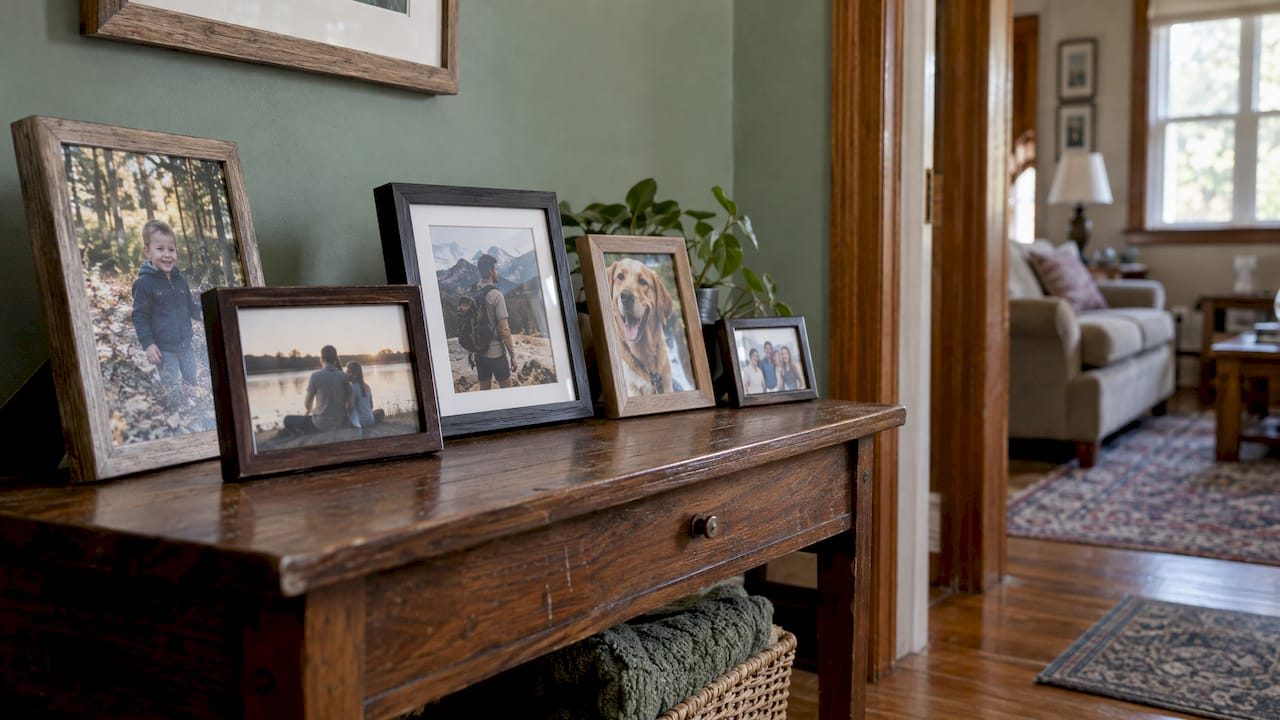

Suicide Memorial Ideas That Honor a Life With Care
When someone dies by suicide, the grief often arrives with questions, silence, and a fear of saying the wrong thing. A memorial can help you move toward what you most want to hold onto: the person who lived. The ideas below are practical and gentle. Some are small acts at home, some bring people together, and one gives every memory a lasting place that family and friends anywhere can visit: an online memorial page, such as the ones we build at Memory Keep.
We are sorry for your loss. Take what helps, and leave the rest for another day.
TL;DR
- Focus on the person’s life, passions, and relationships. Safety guidance asks that memorials leave out how the person died.
- Simple acts count: a favorite meal, their music, a candle, a plant, a memory box, a letter written to them.
- Ask family and friends to contribute stories and photos so the memorial reflects the whole person, not one version of them.
- A shared online memorial keeps photos, videos, and messages together and can be reached from anywhere by one link.
- If you or someone you know is in crisis, call or text 988, the Suicide & Crisis Lifeline.
Table of Contents
- Begin With How You Speak About Them
- Quiet Memorial Ideas You Can Do at Home
- Bringing People Together to Remember
- Remembering Together Over Time
- Create a Lasting Online Memorial Page
- One Page for Every Memory: What Memory Keep Offers
- Including Children and Pets in Remembering
- Our Perspective
- Frequently Asked Questions
- Sources
Begin With How You Speak About Them
Before choosing any idea, it helps to decide how you will talk about the death, because every memorial says something about it, whether you intend it or not.
The Ohio Suicide Prevention Foundation names one core principle for memorials after a suicide death: focus on the person’s life, strengths, and relationships rather than the details of their death. It also recommends hopeful, safe language and including 988 and local support resources.
Here is what that looks like in practice:
- Leave out the method and the scene. The Suicide Prevention Resource Center’s guide for funeral directors says it is important for safety not to include the means of death.
- Choose plain, stigma-free words. The same guide offers phrasing such as “died by suicide” or “died after many years of living with mental illness,” and suggests talking with the family about whether to name the cause at all.
- Skip “quick,” “painless,” and “better place.” Samaritans explains that these phrases can unintentionally encourage vulnerable people, so memorial pages do better describing the person’s positive qualities and passions.
- Say it once, if at all. One family-focused guide describes mentioning the death once, early, in a sentence or two, then turning toward the person’s life, and checking the wording against AFSP’s safe-speaking guidance (Sunflowers After Suicide, 2026).
You do not owe anyone an explanation. You decide what is shared, and it is fine to say as little as feels right.
Quiet Memorial Ideas You Can Do at Home
Grief does not need an audience. These private rituals are often where people first feel a little lighter.
- Cook their favorite meal. Forefront Suicide Prevention suggests cooking a favorite dish, listening to their music, and writing or making art about them. The kitchen fills with a memory, and sharing the meal with family makes it a small gathering.
- Light a candle or grow a plant. Mind lists lighting a candle, growing a plant, and marking birthdays and anniversaries among ways people remember someone who died by suicide.
- Talk to them or write to them. Mind also mentions speaking aloud to the person or writing them a letter. Some people keep these in a journal and return to them on hard days.
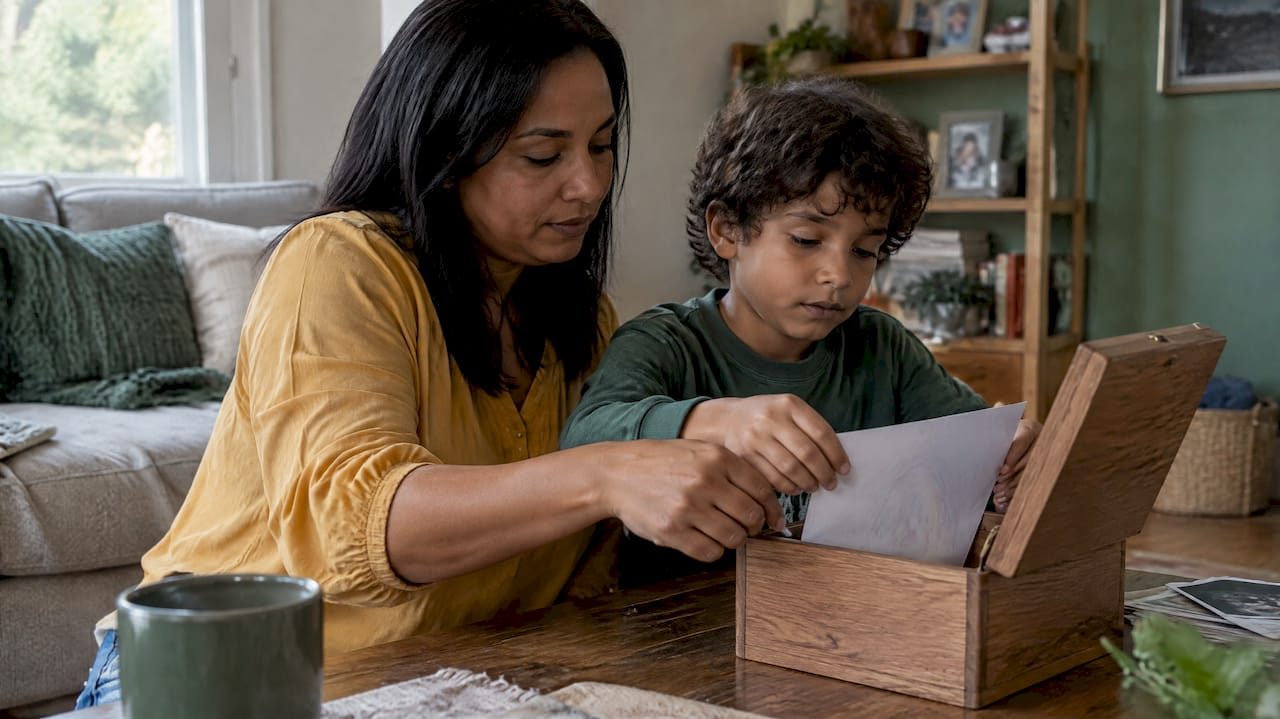
- Build a memory box or scrapbook. Journals, scrapbooks, and memory boxes gather small things in one place: ticket stubs, handwritten notes, a favorite scarf.
- Keep a keepsake. The Suicide Prevention Resource Center notes that keepsakes such as a lock of hair, fingerprint jewelry, or an urn are a simple way for survivors to memorialize someone, and that survivors often feel regret when they learn about keepsakes too late. If that matters to you, it is worth deciding early.
Bringing People Together to Remember
Sometimes grief eases when it is shared. A gathering, whether held right away or on an anniversary, lets people see that your person was loved by many.
The author of Sunflowers After Suicide offers several ideas for a celebration of life, including prompt cards that invite guests to share one memory, a photo table organized by life chapters, and a short slideshow set to music the person loved. A card that asks guests to share a memory that still makes them laugh brings out specific moments, and specific moments are what people carry home.
AARP’s planning guide adds a useful tip for families: choose a point person to coordinate, and gather memories, stories, photos, and letters through a shared online document. It also says the service should be “a reflection of the person you are honoring.” That one sentence is a good test for any idea on this page. Ask yourself whether it sounds like them.

Ideas that honor their passions
Think about what lit them up. A few starting points:
- Play the playlist they made for road trips.
- Display things they loved: a guitar, a baseball glove, a garden tool, a recipe card in their handwriting.
- Ask guests to wear their favorite color.
- Collect favorite sayings, jokes, or lines they repeated and put them on a table or in a book.
Remembering Together Over Time
Memorials do not have to end after the first weeks. Many families find that doing something in the person’s name gives love somewhere to go.
- Walk in their honor. Forefront Suicide Prevention suggests joining an AFSP Out of Darkness Walk in your loved one’s name, or volunteering for a program that mattered to them.
- Make a Lifekeeper Memory Quilt square. The American Foundation for Suicide Prevention invites survivors to create squares in memory of loved ones. No sewing skills are needed, and there is a Digital Memory Quilt where survivors honor loved ones with photos and stories.
- Give in their name. The Ohio Suicide Prevention Foundation lists community service days, mental health awareness walks, volunteering with mental health agencies, and fundraising for 988 as ways communities remember.
- Plant a tree or a garden. SAVE’s grief support packet suggests setting up a memorial, planting a tree, or taking part in an event or charity in their memory.
If you are reading this while someone close to you is struggling right now, it can help to learn the warning signs of suicide risk and what helps. In the United States, you can reach the Suicide & Crisis Lifeline by calling or texting 988 at any hour.
Create a Lasting Online Memorial Page
Families are often spread across states or countries. Photos sit on different phones, and a friend’s favorite story may never reach the people who need to hear it. A shared online memorial pulls these pieces into one gentle place, and it is one of the most lasting ways to answer the question of what to do with all those memories.
Here is how to build one, step by step, and where we at Memory Keep make it easier.
- Choose who will lead. As AARP suggests for services, one point person keeps things moving. This can be you, or a sibling or friend who offered to help.
- Gather photos and videos. Ask relatives, friends, coworkers, and teammates to send favorites. A memorial built from many viewpoints feels truer. On Memory Keep, family or friends can upload photos and videos themselves to a shared memorial, so you are not collecting everything by email.
- Write the tribute. Describe who they were: what made them laugh, what they cared about, how they showed love. Keep it centered on their life and leave out how they died. If words feel impossible, our optional writing helpers and meaningful memorial quotes can give you a place to start.
- Add the moments that tell their story. A memorial page can hold unlimited photos, videos, and audio, so you can include a voicemail you treasure or a song they sang. Our curated music library is organized by feeling, and interactive life maps let you mark the places that mattered: where they grew up, where they met their partner, where they felt most at peace.
- Invite visitors to leave messages. Each memorial has its own link to share with loved ones anywhere. Visitors can leave messages of remembrance, and reading them years later is often a comfort.
- Add supportive resources. Samaritans advises including a list of supportive resources on a memorial page. Adding the 988 line to the tribute text takes a minute and may reach someone who needs it.
- Turn it into keepsakes. Memory Keep can generate downloadable keepsake photo books and slideshow videos from a memorial, and free QR codes you can place on a card, a program, or a headstone so the page is a scan away.
For more on this kind of page, see our guide to creating a lasting digital memorial and the benefits of sharing an online memorial.
Safe messaging on a shared page
A page that many people can see deserves a few ground rules. Samaritans recommends avoiding details of the death, especially during an ongoing police investigation, and keeping a watchful eye on comments. Before you share the link widely, tell close family and friends what you would like messages to focus on: memories, gratitude, and love. Share the link first with people you trust, and let it travel from there.
One Page for Every Memory: What Memory Keep Offers
A Memory Keep page is a permanent place for photos, videos, audio, tributes, visitor messages, and life maps, shared by one unique link. You can start on the free plan, which has limited uploads and features. The Full plan unlocks unlimited access for a memorial and costs $15, one time, with no subscriptions or renewals. We do not show ads or sell data.

If your loved one shared their life with a partner, or if two people are being remembered together, our joint memorial features hold both stories in one place. When you are ready, you can start a memorial on Memory Keep, or visit our help page with any questions.
Including Children and Pets in Remembering
Children feel loss deeply, and honest answers protect them. The Bridge the Gap Hope and Healing Guide advises answering their questions accurately and reassuring them that nothing they said or did could have prevented the death. It warns that unanswered children fill in the blanks with imaginings that are often worse. Its suggested activities are a memory picture book or memory box, a framed picture, a tree or garden planted in the person’s honor, and a memorial candle. Our guide on supporting children through grief offers more gentle ways in.
Pets are family, too, and a pet may have been part of what held your person’s days together. The American Academy of Pediatrics suggests a small ritual after a pet dies, such as a memorial collage or planting a tree, offered gently and following the child’s wishes. Memory Keep memorials are for people and pets alike, so a beloved dog or cat can have a page of their own, or appear beside the person they loved.
At school or at work, the Ohio Suicide Prevention Foundation suggests temporary notes or flowers left in a collection box, or a digital memory book where colleagues post messages that are shared with the family.
Our Perspective
We believe a memorial after suicide should answer one question: who was this person to the people who loved them?
Grief after suicide can feel crowded with questions and with silence. Many families tell the story in fragments: one sibling holds the childhood photos, a friend has the videos from a road trip, a coworker remembers the kindness nobody else saw. A memorial page lets those pieces sit side by side, so the person is remembered in full and not by the way their life ended.
That is why we built Memory Keep around permanence and gentleness. One payment of $15 on the Full plan unlocks unlimited photos, videos, and audio for a memorial, with no renewals to worry about while you are grieving. Free QR codes carry the page to a card or a headstone. A music library organized by feeling helps you find a song when you cannot find words. There are no ads, and we do not sell data.
Remember that you do not have to do this alone or all at once. A memorial can begin with a single photo and a sentence about who they were, and it can grow as more people share what they hold.
Memory Keep
Frequently Asked Questions
What should I include in a memorial for someone who died by suicide?
Include what made them who they were: their favorite photos, music, sayings, passions, and the relationships they cherished. Leave out the method and details of the death. Safety guidance from the Suicide Prevention Resource Center says this is important, and adding a note about 988 support is a caring step.
Do I have to say that it was suicide?
No. That is a family decision. Some families name it once, with gentle language like “died by suicide,” and then turn to the person’s life. Others choose not to name the cause. Either choice can be loving, and you can talk it over with relatives before you share anything publicly.
How can far-away family and friends take part?
An online memorial lets everyone contribute from anywhere. With Memory Keep, you share one unique link, and family or friends can add photos and videos and leave messages of remembrance. The page can later become a keepsake photo book or slideshow video, so people who could not attend still share in the remembering.
Is there a way to do this for free?
Yes. Our free plan lets you begin a memorial with limited uploads and features. If you want unlimited photos, videos, and features, the Full plan is a one-time payment of $15 for that memorial. See the plans.
How do I talk to children about a memorial?
Answer their questions honestly in words suited to their age, and reassure them that nothing they did caused the death. Then invite them into something concrete, like choosing a photo, drawing a picture for the memory box, or planting something in the person’s honor.
Sources
- Ways to Remember Your Loved One, Forefront Suicide Prevention
- Supporting Survivors of Suicide Loss, Suicide Prevention Resource Center
- Suicide Loss Grief Support Packet, SAVE
- Memorials After a Suicide Death, Ohio Suicide Prevention Foundation
- Celebration of Life After Suicide Loss, Sunflowers After Suicide
- How to Plan a Memorial Service or Celebration of Life, AARP
- Lifekeeper Memory Quilts, American Foundation for Suicide Prevention
- Losing someone to suicide, Mind
- Remembering friends or family who have died by suicide in a safe way online, Samaritans
- When Someone You Love Dies by Suicide, Bridge the Gap Hope and Healing Guide
- When a Pet Dies: How to Help Your Child Cope, HealthyChildren.org
- Suicide Risk in Detox: Warning Signs and What Helps