Hold one short live gathering at the time that overlaps best for most of your people, and keep an always-open online memorial page for everyone who cannot be there. Your first step is simple: choose a date and a time window, then create a shareable memorial link you can put in every invitation. The live moment gives you a shared ritual, and the page lets each person contribute on their own schedule.
TL;DR:
- List the gathering time in UTC and local zones; if no fair overlap exists, hold two short sessions instead of asking relatives to lose sleep.
- Tell guests the event length in advance, assign a timekeeper and tech host, and use a sequence of readings, tributes, sharing, and a closing ritual.
- For a montage, set a submission deadline in the invitation, share one upload link, and send a sample tribute with a gentle reminder.
- Test audio and video the day before, record the event, enable captions, and prepare phone access and a slideshow in case the feed fails.
- State whether the page is private, password protected, or public in the invitation, and name moderators for posts and technical questions.
Table of Contents
- How do you choose a format and a fair time?
- What does a good agenda look like?
- How can far-away loved ones contribute on their own schedule?
- What should your technical checklist include?
- How do you keep the memorial private, moderated and accessible?
- Why we believe in a memorial that stays open
- How can Memory Keep help you bring everyone together?
- FAQ
- Sources
How do you choose a format and a fair time?
Start by asking where people actually live. A synchronous memorial is one live gathering. An asynchronous memorial has no single live moment, so everyone adds photos, videos and words when they can. A hybrid memorial pairs a short live event with an open page. For a memorial across time zones, we find hybrid fits most families, because nobody has to choose between sleep and saying goodbye.
Practitioner guidance for virtual memorials suggests meeting with family by video to plan and sending clear invitations with technical instructions, and assigning facilitation roles. A few scheduling habits make that planning easier:
- Find the widest overlap, even if it is only a brief window across all zones.
- Write the time in UTC next to each local time so nobody has to convert it.
- For very spread groups, run two short sessions rather than one very late or early call.
- For recurring remembrances, rotate the time so the same people do not always bear the inconvenience.
- Keep a short gathering brief, and make a fuller service longer only as needed.
Name one person as timekeeper and tech host, so family members can simply be present.
What does a good agenda look like?
Grief is tiring, and a clear order of events helps everyone relax into it. Here are three agendas you can copy and adapt.
- Short memory circle: Welcome and a few words about the person. A brief reading. Two or three short tributes. A brief period of open sharing. A closing ritual, such as lighting a candle at each home at the same moment.
- Full virtual service: Welcome and logistics, including how to speak and how to use the chat. Readings and music. Several pre-recorded tributes from people who could not attend live. Scheduled live sharing, with names listed in advance. A closing words and a moment of silence.
- Hybrid program: A brief live gathering for the shared ritual, with the memorial page link on screen throughout. Alongside it, an always-open page holds a slideshow and gentle prompts, such as “Share a favorite memory” or “What did they teach you?”, so people far away can add to it after the call.
Whichever you choose, tell guests how long it will last. Predictable endings make it easier for people to join.
How can far-away loved ones contribute on their own schedule?
Asynchronous tributes are often where the most tender memories appear. Some people cannot speak on a call but can write when it suits them, even late at night. Research on web-based support for bereaved families found that online resources encouraging memory collections and sharing were positively received when in-person rituals were not possible.
- Send one shared upload link and a short note explaining what to add.
- Ask for short smartphone video messages, filmed in landscape.
- Set a deadline if you plan to build a montage, and say so in the invitation.
- Present contributions as a timeline or “legacy wall,” with a few pinned messages at the top.
- Play the compiled montage during the live event, or announce a “viewing hour” in another time zone.
Pro Tip: Send a gentle reminder before your deadline with an example tribute, since people often hesitate until they see what a short, simple contribution looks like.
For more ideas to inspire contributions, see our guide to creative ways to honor a loved one.
What should your technical checklist include?
Most technology trouble is avoidable with a quick run-through before the day. Know the different kinds of tools. Live meeting tools allow real interaction but need good connections. Invite-only streaming suits audiences who only watch. Dedicated memorial pages give you permanence and a single place to return to. Many families use a combination of these tools.
- Assign a co-host who can admit guests, mute noise and manage the chat.
- Test audio and video with the main speakers the day before.
- Confirm that guests can join from a phone and on a slow connection.
- Turn on recording so absent relatives can watch later.
- Enable captions or transcription if your platform offers it.
- Prepare a phone dial-in option and a pre-recorded slideshow in case the live feed fails.
- Use one canonical memorial link everywhere, so no one hunts through old emails.
If you want a printed way to reach the page, a memorial QR code on a program or card can open it in one scan.
How do you keep the memorial private, moderated and accessible?
Decide the sharing level early: private and invite-only, password-protected, or public. Say which one it is in the invitation, so nobody posts something personal in a space they thought was closed. Choose a moderator who can remove hurtful posts and a named person who handles tech questions.
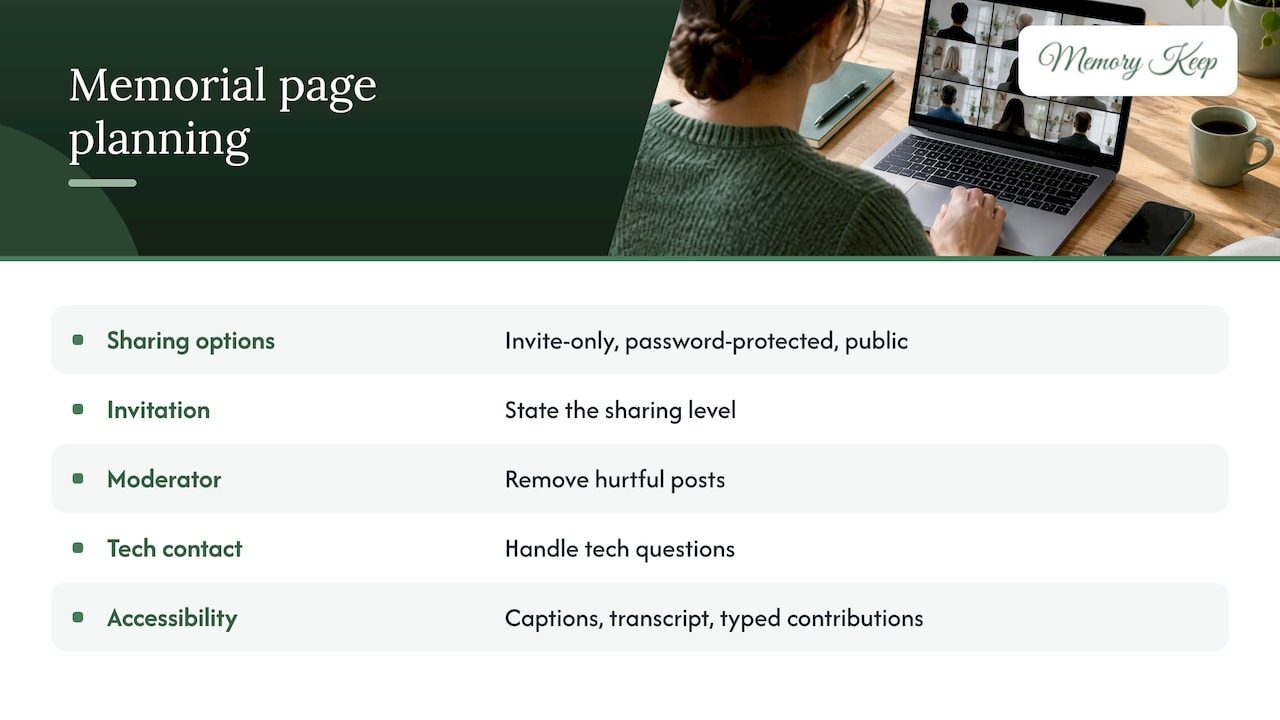
Accessibility makes a gathering feel welcoming. Offer captions or a transcript, and give people a typed way to contribute if they cannot join live. Be mindful of cultural and faith customs when inviting readings or rituals, and ask relatives what feels right rather than assuming. If the page will hold passwords or accounts, our partners at Aging Solo offer helpful digital legacy planning guidance on who should keep access.
Why we believe in a memorial that stays open
Research on digital grief tools supports what we see in practice. A systematic review of digital grief technology found that digital memorials support continuing bonds and that asynchronous access can reduce isolation for people who mourn far from one another. Our lesson is simple: always name a tech host, and keep the live part short and predictable. Remote rituals are not a lesser goodbye. Bereavement experts have observed that remote ritual technologies have become an enduring way to make meaning when gathering in person is not possible. Grief is lighter when it is shared, even across oceans.
— Memory Keep
How can Memory Keep help you bring everyone together?
If you want an always-open place for tributes, we built Memory Keep for exactly this. A memorial page gives you one link to place in every invitation and on screen during your live gathering, so the page and the event support each other.
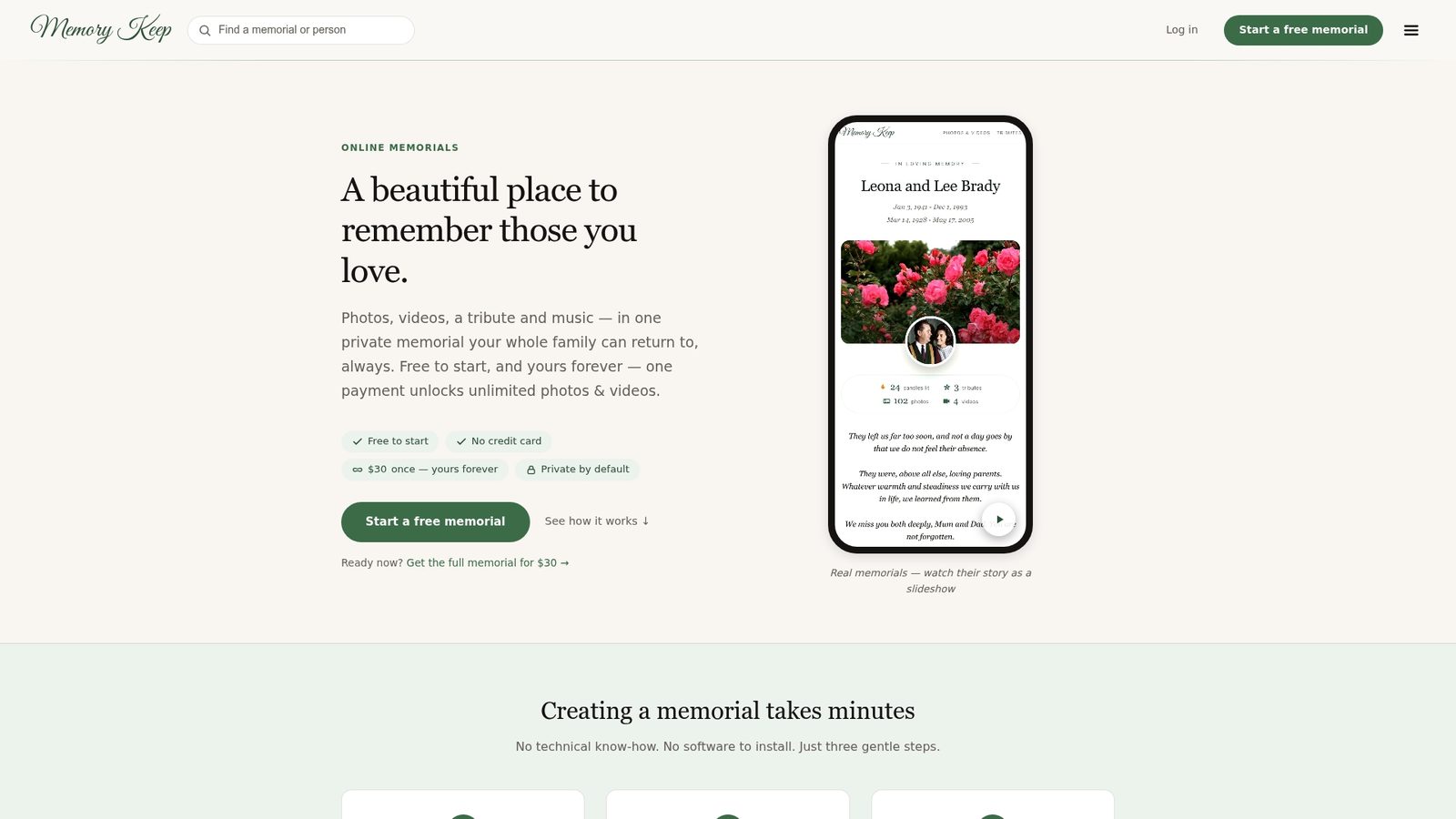
- A unique shareable link for family and friends anywhere
- Contributor uploads, so relatives can add photos, videos and messages
- Downloadable keepsakes, including photo books and slideshow videos
- Free QR codes for headstones, cards and printed programs
- No ads and no data selling
You can start with a free memorial, or review our features and pricing when you are ready to explore the available options.
This article is general information, not a substitute for advice from a qualified doctor. Consult a qualified healthcare professional about your own circumstances before acting on anything here.
FAQ
What is a memorial across time zones?
It is a remembrance shared by people who live in different parts of the world, usually combining a short live event with an online page. Each person takes part at a time that works for them.
What is the best time for a memorial across time zones?
Pick the window where the most people can attend without losing sleep, and list it in UTC as well as local times. If no fair window exists, hold two short sessions or rely mostly on an open memorial page.
How long should a virtual memorial last?
A short gathering works well when kept brief, and a fuller service should last only as long as needed. Shorter events keep grieving guests from tiring.
Can people who miss the live event still take part?
Yes. Record the gathering and keep the memorial page open, so they can watch later and add their own photos, videos or written memories.
Where can I find grief support after the memorial?
Our guide to grief resources online lists support options. A trusted counselor or local bereavement group can also help.
Sources
For more on creating a lasting page, see our guide to a lasting digital memorial, and read about the benefits of an online memorial. For research and planning detail, the sources we cite above are a good place to start.
- Digital grief technology to support bereavement: A systematic review of potential benefits and risks
- -Rev. Abigail Clauhs Unitarian Universalist Minister & Chaplain (she/her/hers)
- “The person was like the glue in the… | F1000Research