Pre-planning an online memorial means deciding, while you are well, how you want to be remembered: which photos, which stories, which music, and who will look after the page. It is not a funeral contract, and you do not have to pay anyone in advance. You are simply leaving your family something gentle to open when the time comes, instead of a blank screen and a hundred questions.
We wrote this guide for people who are planning ahead for themselves, for a parent or spouse, or for a loved one facing a serious illness. It is also for anyone who has quietly wondered whether this is too soon. You will find the steps, the cautions, and a few honest words about what planning can and cannot do.
TL;DR
- Pre-planning an online memorial is separate from prepaying for a funeral. You can gather photos, write your words and name a caretaker without signing a contract.
- Start small: pick 10 to 20 photos, write a few paragraphs, choose one song, and tell one trusted person where it all lives.
- Choose one family member as the page moderator, and keep your original photos and videos in a separate offline archive.
- Look past the word “lifetime” and ask what happens to your content if a platform is sold or closes.
- With Memory Keep, you can begin on the Free plan and unlock the Full plan for a $15 one-time payment, with no subscription.
Table of Contents
- Why plan a memorial before it is needed
- Planning is not the same as prepaying
- What belongs in a pre-planned online memorial
- A gentle way to begin: seven steps
- Timing: when the page should be opened
- Choosing a platform: questions to ask first
- Protecting the digital side of your legacy
- Our perspective
- Starting your page with Memory Keep
- Pre-planning for a pet
- Making room for grief and ritual
- A simple checklist to keep
- FAQ
- Sources
Why plan a memorial before it is needed
Grief arrives without warning, and it arrives with a to-do list. Funeralwise estimates that families face more than 150 decisions in the first 48 to 72 hours after a death. Choosing photos for a tribute is rarely the hardest of them, but it is often the one that feels most tender and most rushed.
There is a cost side too. According to AARP’s reporting on the National Funeral Directors Association survey, the median cost of a funeral with viewing and burial was $8,300, and a funeral with cremation was $6,280, as of 2023. An online memorial is a very different kind of commitment. It does not replace a service, but it can hold the stories and images that a service only touches for an afternoon.
Planning ahead also does something for the person planning. A scoping review on digital legacy in palliative care found that creating an online memorial can be an empowering form of grief work for people facing life-limiting illness, because it helps them preserve their character and sense of self. Many people tell us the same thing in simpler words: it felt good to say it in their own voice.
Planning is not the same as prepaying
This is the point that confuses most readers, and search results tend to blur it. Funeral pre-planning pages often mix together two things.
Planning means writing down your wishes: the kind of service, the readings, the music, the memorial page. It costs nothing and commits you to nothing. Funeralwise notes that you can create a detailed, shareable plan online without signing a contract.
Prepaying means handing money to a funeral home or plan provider now, for services later. AARP’s guidance lists real drawbacks, including the risk that a provider fails or a plan cannot be transferred, and it points to alternatives such as payable-on-death accounts.
An online memorial belongs in the first category. You can plan every part of it and still decide about funeral payments separately, with a financial adviser or an attorney who knows your state.
What the Funeral Rule protects
If you do speak with a funeral home while planning, you have rights. Under the FTC’s Funeral Rule, you may choose only the goods and services you want, and pay only for those, whether you arrange things in advance or at the time of death. For example, a provider must tell you that alternative containers are available for direct cremation, and must provide one if you ask. Ask for the price list at the start, and take it home to read in peace.
What belongs in a pre-planned online memorial
A memorial page is more than a photo album. The ones that comfort people most tend to hold five kinds of content.
- A portrait and a few lines. One photo you like, and a short statement in your own words.
- Photos and videos across a lifetime. Childhood, work, travel, ordinary Tuesdays. Pick the ones with context, where you can say who is in them and why they matter.
- Stories and tributes. A page of memories you would want your grandchildren to read. If you are planning for someone else, ask them to tell you a story and write it down as they say it.
- Music. A song, or a few, that carries a mood. Families often find that choosing music is the moment the page starts to feel like the person.
- A life map. Where you were born, where you met your spouse, where you raised your children. Place anchors memory in a way dates cannot.
You do not need all five on day one. A page with six photographs and one honest paragraph is already a gift.
A gentle way to begin: seven steps
1. Decide whose memorial it is
Most people start with themselves. Others plan with a parent, a spouse, or a friend with a terminal diagnosis. If it is for someone else, ask first and let them lead. Some people want to be involved. Others would rather you simply listen and keep what they say.
2. Gather photos in one folder
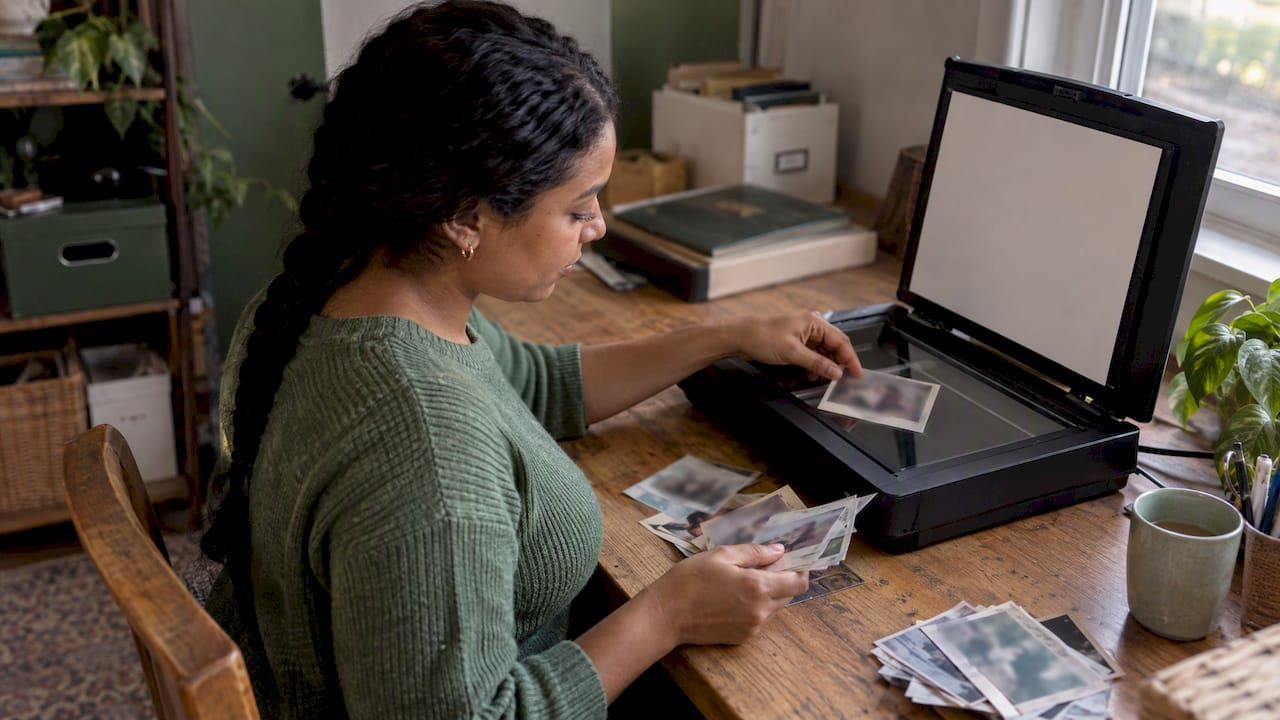
Begin with a single folder on your computer or phone. Pull in photos from old albums, text threads and email. Scanning a handful of prints is plenty to start. Do not edit or delete anything yet.
3. Write the words while your voice is clear
Write a few paragraphs about what you loved, what you learned and what you hope people remember. You can write a short note to each person you care about. If writing feels heavy, record yourself telling a story. Audio is easy to add later, and hearing a familiar voice means more than most people expect.
4. Choose the music and the mood
Pick one or two songs that feel like you. A curated library organized by feeling can help when you do not know where to begin. Memory Keep’s music library is arranged that way, so you can start from how you want the page to feel.
5. Name a page caretaker
One person should be able to approve posts and keep the tone kind. End-of-life planning authors recommend designating a single family moderator to keep the space warm rather than chaotic. Tell that person in advance, and write the decision in your planning documents so nobody has to guess.
6. Decide who sees it, and when
A private link shared with chosen people is different from a public page. The same guide notes that setting a page to public makes it discoverable by search engines, which can invite spam or unwanted comments unless moderation is on. If you include photos of other people, make sure they are comfortable with it.
7. Tell someone where it is
A beautiful memorial nobody can find helps no one. Put the link, the account email and the name of your caretaker in the document where your family looks for important papers.
Timing: when the page should be opened
There is a quiet truth in the research that deserves space. The same scoping review that praises memorial-making for people near the end of life also stresses that bereaved families should control when and how they engage with this kind of digital content, so that it does not become a source of distress instead of comfort.
In practice, this means a pre-planned page does not have to go live the day after a death. You can leave a note for your family: “Open this when you are ready.” Some families share the link at the service. Others wait weeks. Both are right.
If you are planning with a loved one who is living with memory loss, the page can also be a shared project before it is a memorial. Looking back through photographs together is a well-known caregiving practice, and reminiscence activities for family caregivers offer low-effort ways to do it. The stories you hear while choosing photos often end up as the best lines on the page.
Choosing a platform: questions to ask first
A memorial is only worth planning if it will still be there. Before you commit your photographs and words to any online memorial service, ask these questions.
| Question | Why it matters |
|---|---|
| Is it a one-time payment or a subscription? | A subscription can lapse if nobody is paying attention years from now. |
| What does “lifetime” actually mean? | It can refer to the life of the company, not of the person. |
| Can you export your content? | A downloadable copy in common file formats protects you if a platform changes. |
| Are there ads, and is data sold? | A memorial should not be a billboard. |
| What happens if the company is sold or closes? | Few services promise anything here, so read the terms. |
| Can family contribute? | Collaborative uploads spread the work and the memories. |
On the lifetime point, End of Life Tools advises never taking such claims at face value, and prioritizing platforms that let you export content. Whatever you choose, keep your original high-resolution photos and videos in a separate offline archive. A memorial is a public-facing space. Your archive is your safety net.
If you want to compare options by type, our guide to memorial websites for families and pets walks through what to look for.
Protecting the digital side of your legacy
A memorial page is one piece of a larger digital footprint. Photos sit in cloud accounts, messages in email, memories on social media. Without instructions, your family may not be able to reach them.
Funeralwise suggests a simple first step: take an inventory of your digital accounts, listing each service and the email or username attached to it. It also cautions that listing passwords in a will or a document can be risky because of legal and security complications, and recommends using platform tools such as Google’s Inactive Account Manager or Facebook’s Legacy Contact as a first line of defense.
A broader look at this subject appears in a piece on planning what happens to your digital legacy, which makes the case that we plan for possessions and should plan for digital remains too. For our own overview, see Digital Legacy Planning: Your Complete 2026 Guide.
Our perspective
We built Memory Keep because we kept hearing the same story. A family loses someone, and in the first week they are asked for photos, for a few words, for a song, and nobody can find any of it. The love is there. The organization is not.
We think planning a memorial is an act of tenderness, not morbidity. It does not tempt fate. It says: this is who I was, and this is how I want you to feel when you think of me.
That is why we chose a one-time payment instead of a subscription. A memorial is meant to be permanent, and it should not depend on someone remembering a renewal date during the hardest year of their life. It is also why we do not run ads or sell data. A page about a person’s life is not a place for either.
We also believe a memorial should be shared. Family and friends can upload photos and videos to the same page, leave messages of remembrance, and see the life events on an interactive map. For couples, we support joint memorials, so two people who shared a life can share a page. Printable programs and keepsakes generate from what you have already built, so a service program does not have to be a scramble.
One honest note: keep your own originals. We want you to trust us, and we also want you to have a copy of everything that matters, wherever it lives.
— Memory Keep
Starting your page with Memory Keep
You can begin on our Free plan, which has limited uploads and features, and take as long as you like. When you are ready for unlimited photos, videos, audio and storage for that memorial, the Full plan is a $15 one-time payment, with no subscription and no renewal. Every memorial also gets a unique shareable link and a free scannable QR code, which families often place on a headstone or a memorial card.
You can see everything included on our features page, or look at how real families have shaped their pages, such as this memorial for a beloved father. If you would like to begin now, you can create a memorial at Memory Keep.
For a deeper walk through the process, read Creating a Lasting Digital Memorial, and for the emotional case for doing it, the benefits of creating and sharing an online memorial.
Pre-planning for a pet
Pets are family, and many people plan for them too, especially with an older dog or a cat with a long illness. The steps are the same, only softer: choose photos from the first week home, write down the quirks and habits, pick a song, and note where a favorite spot is. We have a guide on how to create a private pet memorial in 30 minutes if you want to begin today.
Making room for grief and ritual
Planning ahead can quiet a little of the dread, but it will not erase grief. Your family will still mourn, and that is as it should be. What you can do is give them a place to go. Rituals do not need to be elaborate, and writing on grief rituals suggests that meaning matters more than how often you practice them. Lighting a candle when the page is opened, or sharing a favorite story on a birthday, is enough.
If you are helping someone who is already grieving, our grief resources online and twelve essential grief insights are written for exactly that moment. If grief feels like more than you can carry, a licensed counselor or your doctor can help, and the 988 Suicide and Crisis Lifeline is available by call or text at 988 if you are in crisis.
A simple checklist to keep
- One folder of favorite photos and videos, with an offline backup
- Three to five paragraphs in your own words, or a recorded story
- One or two songs
- A short list of life places for the map
- The name of your page moderator
- Your privacy choice: private link or public
- The link and account details, stored with your important papers
- A note to family about when to open it
FAQ
Does pre-planning an online memorial cost anything?
It does not have to. You can gather materials and begin a page on a free plan. On Memory Keep, the Free plan has limited uploads and features, and the Full plan is a $15 one-time payment for unlimited use of one memorial. Funeral prepayment is a separate decision.
Is a pre-planned memorial the same as a prepaid funeral plan?
No. A memorial page holds photos, stories and messages. A prepaid funeral plan is a financial contract with a provider. AARP’s guidance lays out the risks of prepaying, so read it before signing anything.
Who should manage the page after I am gone?
Choose one trusted family member or friend as moderator, and tell them ahead of time. They can approve posts and keep the tone respectful. Write the decision down where your family keeps important documents.
Should my memorial be public or private?
Private is the gentler default, since you choose who receives the link. A public page can be found by search engines and may attract unwanted comments, so use moderation if you go that route. You can decide again later.
What is the best online memorial site?
The best one for you is the one that fits your needs: a one-time cost, no ads, clear privacy, and a way to keep your own copies. Use the questions in the table above to judge any service, including ours.
Sources
- Should You Prepay for a Funeral, Burial or Cremation? (AARP)
- The FTC Funeral Rule (Federal Trade Commission)
- Funeralwise: Funeral pre-planning
- Funeralwise: Your Digital Assets
- Online Memorials: Options, Privacy and How to Create One (End of Life Tools)
- Digital legacy in palliative care and end-of-life care planning: a scoping review
- Most of us will leave behind a large digital legacy (The Conversation)
- 10 Low Effort Reminiscence Therapy Activities for Family Caregivers
- Grief Rituals: Why Meaning Matters More Than Frequency